
Kettle
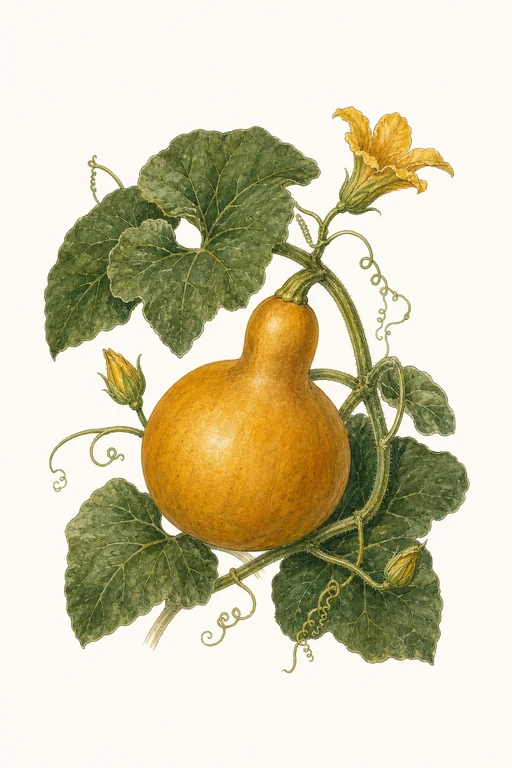
Sink your senses into Kettle’s richly ripened, deep-amber gourd flesh—silky to the eye with a firm, spoonable texture once cured.
As it matures, the fruit develops a distinctive kettle-like form that holds its shape beautifully, making it a standout for pantry-ready creations and display-worthy harvests. Grow Kettle for a long, satisfying season that rewards with bold color, sturdy character, and a versatile, dependable gourd for home projects and preservation favorites.
Light: Full SunMaturity: 95 DaysHabit: Vine
Planting schedules and alerts are optimized for Columbus (Zone 6b).
Crop Dates
| Milestone | Date |
|---|---|
| Start Indoors | Direct Sow |
| Last Frost | Apr 25th |
| Transplant / Sow Outdoors | May 9th |
| Harvest Begins | Aug 12th |
| Harvest Ends | Oct 16th |
Crop Details
| Trait | Value |
|---|---|
| Days to Maturity | 95 |
| Sun Requirements | Full Sun |
| Growth Habit | Vine |
| Support Needed | Trellis |
| Planting Depth | Normal |
| Germination Temp (°F) | 75 |
| Min Soil Temp (°F) | 70 |
| Min Night Temp (°F) | 55 |
| Harden Off (days) | 12 |
Culinary Notes

Chef's Note
Kettle is a pantry-minded gourd: when cured, it shifts into a firmer, spoonable texture that won’t turn watery, so it earns its keep in roasts and thick purées. Pair it with smoky, hot-spiced profiles and a bright acid finish to keep that nutty sweetness from reading flat.

Best Uses
- cured gourd “cups” or scoops for composed mezze—hold sauces without collapsing
- roasted wedges with browned edges; crisp outside, tender inside
- puréed gourd for thick soup base or pantry-style “butter” with fat and aromatics
- spice-forward braises where it stays chunky through the simmer

Flavor Profile

Frequently Asked Questions
What common pest or disease affects Lagenaria siceraria (kettle/birdhouse gourd), and how do I control it?
How often should I water Lagenaria siceraria during the main growing phase?
How can I tell when my Lagenaria siceraria kettle gourd is ready to harvest?
Sowing Tips

Transplant Conditions
Wait until soil reaches 70°F and nights stay above 55°F before moving outdoors. Harden off for 12 days first.

Direct Sow Preferred
Sensitive roots — does not transplant well. If starting indoors, use biodegradable pots and disturb roots as little as possible when moving outdoors.
Expert Note

Warm the soil thoroughly (and avoid cold nights) before transplanting, and give vines plenty of space to prevent mildew and promote even gourding.