
Keystone Resistant Giant
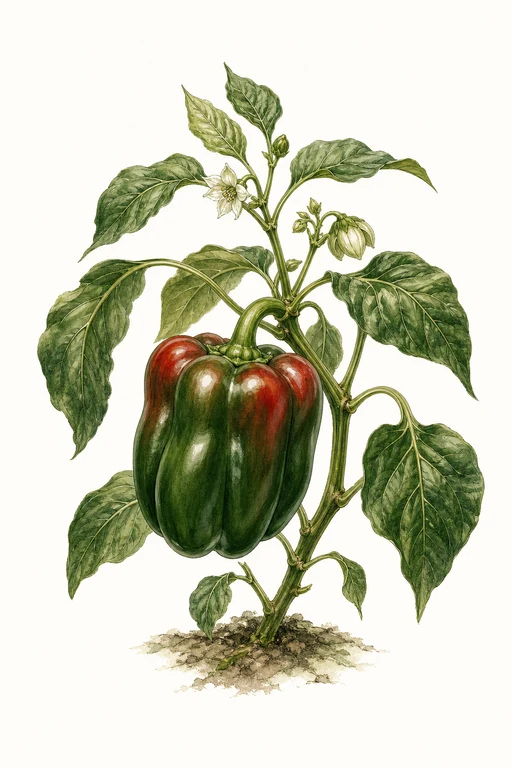
Sink your senses into the glossy, thick-walled bell peppers of ‘Keystone Resistant Giant,’ where a crisp, juicy snap meets a sweet, garden-fresh flavor.
At maturity, fruits mature to a rich, deep green that can turn to a warm red, with a broad-shouldered shape and a satisfying, meaty texture that holds its form beautifully. Grow this vigorous, disease-resistant standout for standout market-style peppers—ideal for fresh use, roasting, and vibrant sauces or pickling.
Light: Full SunMaturity: 75 DaysHabit: Bush
Planting schedules and alerts are optimized for Columbus (Zone 6b).
Crop Dates
| Milestone | Date |
|---|---|
| Start Indoors | Mar 7th |
| Last Frost | Apr 25th |
| Transplant / Sow Outdoors | Jun 20th |
| Harvest Begins | Sep 3rd |
| Harvest Ends | Oct 16th |
Crop Details
| Trait | Value |
|---|---|
| Days to Maturity | 75 |
| Sun Requirements | Full Sun |
| Growth Habit | Bush |
| Support Needed | Stake |
| Planting Depth | Normal |
| Germination Temp (°F) | 80 |
| Min Soil Temp (°F) | 60 |
| Min Night Temp (°F) | 50 |
| Harden Off (days) | 10 |
Culinary Notes

Chef's Note
Keystone Resistant Giant’s thick, meaty walls give you a real bite—less collapse, more structure—so it stays satisfying in hot pans and on a cutting board. Slice it for raw crunch, then roast until blistered; the sweetness pops and the flesh turns silky without getting watery.

Best Uses
- thick-slice raw into salads or crunchy crudités where the walls keep their bite
- high-heat roasting for charred edges and tender, spoonable flesh
- quick sauté/steaming for fajitas and stir-fries—holds shape without turning watery
- pickling for snappy, briny pepper strips

Flavor Profile

Kitchen Pairings
Frequently Asked Questions
What’s the most common problem with Capsicum annuum (bell pepper type) and how do I treat it?
How often should I water Capsicum annuum during the main growing phase?
How can I tell when Capsicum annuum is ready to harvest?
Sowing Tips

Transplant Conditions
Wait until soil reaches 60°F and nights stay above 50°F before moving outdoors. Harden off for 10 days first.
Expert Note

For best disease pressure resistance, use consistent watering (avoid wet/dry swings) and transplant into soil that’s genuinely warm (60°F+).