
Kuroda Improved
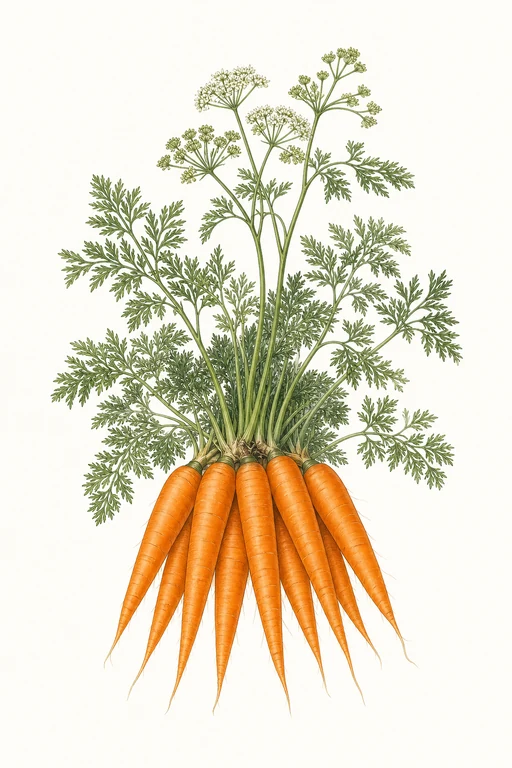
Sink your senses into Kuroda Improved’s rich, earthy sweetness—an elegant carrot with a smooth, uniform bite and a deep orange core that feels almost velvety in the hand.
At maturity (about 75 days), roots develop a classic Kuroda silhouette: crisp, straight, and dependable, with fine texture that shines whether you’re enjoying them fresh or letting their natural sugars intensify under heat. A market-class favorite for gardeners who want beauty in the bed and a steady, satisfying harvest from row to row.
Light: Full SunMaturity: 75 DaysHabit: Taproot
Crop Dates : 8a
| Milestone | Date |
|---|---|
| Start Indoors | Direct Sow |
| Last Frost | Apr 1st |
| Transplant / Sow Outdoors | Apr 1st |
| Harvest Begins | Jun 15th |
| Harvest Ends | Nov 5th |
Crop Details
| Trait | Value |
|---|---|
| Days to Maturity | 75 |
| Sun Requirements | Full Sun |
| Growth Habit | Taproot |
| Support Needed | None |
| Planting Depth | Surface |
| Germination Temp (°F) | 70 |
| Min Soil Temp (°F) | 45 |
| Min Night Temp (°F) | 28 |
| Harden Off (days) | Not Required |
Culinary Notes

Chef's Note
Kuroda Improved lands in that sweet spot between raw crispness and oven-grown caramelization—its fine texture doesn’t turn grainy when heated, just silkier and more syrupy at the edges. Use it for shaved brightness or roast-for-flavor; it’s built to hold its bite and let the natural sugars really show.

Best Uses
- shaved raw salads where the uniform crunch stays snappy
- roasting or sheet-pan caramelizing to bring out syrupy edges
- quick-glazed honey-butter style sides that cling without going mushy
- puree or soup bases where it turns velvety and naturally sweet

Flavor Profile

Kitchen Pairings
Frequently Asked Questions
What’s a common pest or disease problem for Daucus carota (carrot) and how do I fix it?
How often should I water carrots (Daucus carota var. sativus) during their main growing phase?
How can I tell when my carrots are ready to harvest?
Sowing Tips

Transplant Conditions
Wait until soil reaches 45°F and nights stay above 28°F before moving outdoors.
Expert Note

For best germination and straight roots, keep the seedbed consistently moist and avoid thinning delays; carrot roots can fork if the soil surface crusts.