
Kuroda
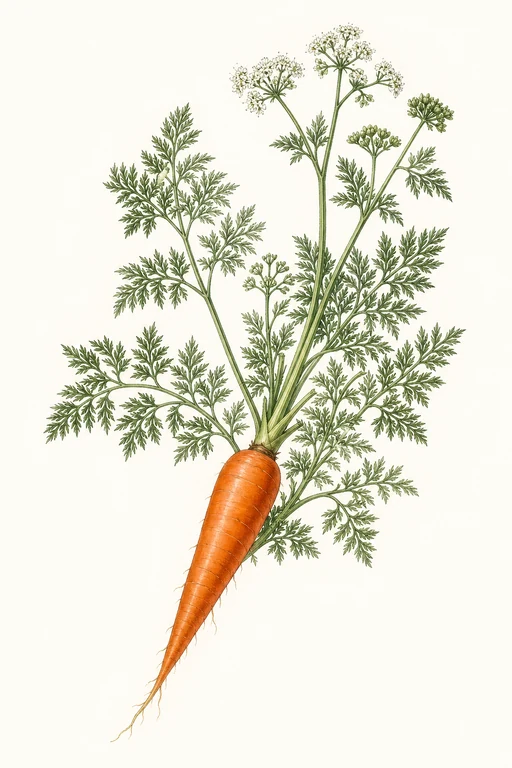
Sink your senses into Kuroda’s rich, earthy sweetness—an inviting carrot that matures in about 75 days to a deep, true orange root with a classic Danvers taper.
The flesh is crisp and finely grained, holding a satisfying snap whether you enjoy it straight from the garden or turn it into vibrant, silky preparations. Kuroda’s dependable shape and clean, uniform roots make it a standout for fresh use, roasting, and bold sauces alike.
Light: Full SunMaturity: 75 DaysHabit: Taproot
Location not set yet
Location not set yet
Enter your ZIP for local crop dates
Kuroda Planting Dates by USDA Zone
Estimated US hardiness-zone windows for sow, transplant, and harvest. Enter a US ZIP above for exact local dates, or open a zone below.
| Zone | Start Indoors | Sow / Transplant | Harvest |
|---|---|---|---|
| Zone 1a | Protected Environment Only | ||
| Zone 1b | Protected Environment Only | ||
| Zone 2a | Direct Sow | May 25th | Aug 8th – Aug 29th |
| Zone 2b | Direct Sow | May 15th | Jul 29th – Aug 25th |
| Zone 3a | Direct Sow | May 15th | Jul 29th – Sep 1st |
| Zone 3b | Direct Sow | May 19th | Aug 2nd – Sep 21st |
| Zone 4a | Direct Sow | May 15th | Jul 29th – Sep 24th |
| Zone 4b | Direct Sow | May 13th | Jul 27th – Sep 27th |
| Zone 5a | Direct Sow | May 8th | Jul 22nd – Sep 30th |
| Zone 5b | Direct Sow | May 4th | Jul 18th – Oct 5th |
| Zone 6a | Direct Sow | May 1st | Jul 15th – Oct 10th |
| Zone 6b | Direct Sow | Apr 25th | Jul 9th – Oct 16th |
| Zone 7a | Direct Sow | Apr 20th | Jul 4th – Oct 20th |
| Zone 7b | Direct Sow | Apr 10th | Jun 24th – Oct 28th |
| Zone 8a | Direct Sow | Apr 1st | Jun 15th – Nov 5th |
| Zone 8b | Direct Sow | Mar 23rd | Jun 6th – Nov 12th |
| Zone 9a | Direct Sow | Mar 6th | May 20th – Nov 26th |
| Zone 9b | Direct Sow | Feb 9th | Apr 25th – Dec 9th |
| Zone 10a | — | Oct 1st | Dec 15th – Feb 28th |
| Zone 10b | — | Oct 1st | Dec 15th – Feb 28th |
| Zone 11a | — | Oct 1st | Dec 15th – Feb 28th |
| Zone 11b | — | Oct 1st | Dec 15th – Feb 28th |
| Zone 12a | — | Oct 1st | Dec 15th – Feb 28th |
| Zone 12b | — | Oct 1st | Dec 15th – Feb 28th |
| Zone 13a | — | Oct 1st | Dec 15th – Feb 28th |
| Zone 13b | — | Oct 1st | Dec 15th – Feb 28th |
Crop Details
| Trait | Value |
|---|---|
| Days to Maturity | 75 |
| Sun Requirements | Full Sun |
| Growth Habit | Taproot |
| Support Needed | None |
| Planting Depth | Normal |
| Germination Temp (°F) | 60 |
| Min Soil Temp (°F) | 50 |
| Min Night Temp (°F) | 35 |
| Harden Off (days) | Not Required |
Culinary Notes

Chef's Note
Kuroda’s finely grained crunch gives you that unmistakable carrot snap even after heat, so it stays pleasant in roasts and purees rather than turning woolly. Use the sweetness to your advantage—roast for caramel edges or blend for a thick, spoonable puree that plays especially well with gingery warmth and rich fats.

Best Uses
- raw ribbon salads with assertive vinaigrette
- roasting until caramelized at the edges for maximum snap
- silky purees and velvety soups that hold body without tasting starchy
- bold carrot-forward sauces (glaze or reduced pan sauce)

Flavor Profile

Kitchen Pairings
Frequently Asked Questions
What pest or disease commonly affects Raphanus sativus (radish) “Kuroda,” and how can I fix it?
How often should I water Raphanus sativus “Kuroda” during the main growing phase?
How do I tell when “Kuroda” radishes are ready to harvest?
Sowing Tips

Transplant Conditions
Wait until soil reaches 50°F and nights stay above 35°F before moving outdoors.
Expert Note

Direct-sow Kuroda New Kuroda after frost once soil is workable, then thin to avoid forked roots and keep soil evenly moist through root set.