
Lacinato Kale
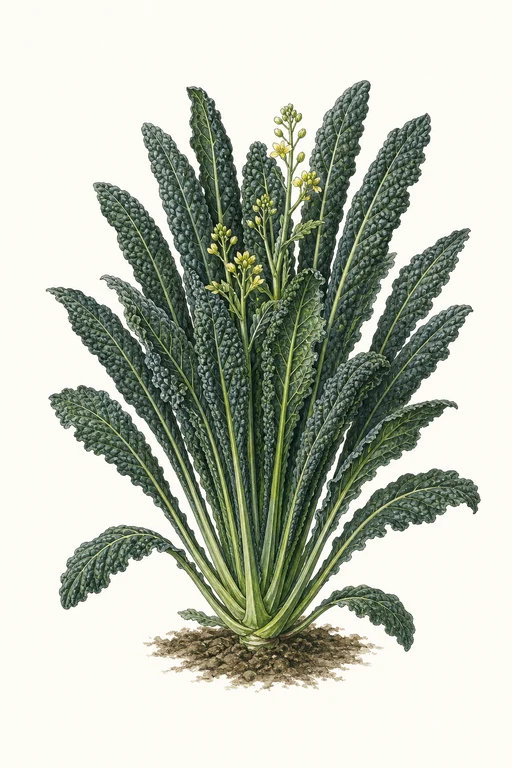
Cool-weather gardens come alive with Lacinato Kale’s dark, ocean-deep leaves—narrow, upright, and richly textured like pressed velvet.
Its flavor is sweet and savory with a gentle mineral edge, and the leaves hold a satisfying, tender-crisp bite that stays elegant through the season. Grow it for abundant harvests of striking greens for fresh salads, hearty sautés, and robust soups, or for pickling to capture its deep, earthy character.
Light: Full SunMaturity: 55 DaysHabit: Rosette
Planting schedules and alerts are optimized for Columbus (Zone 6b).
Crop Dates
| Milestone | Date |
|---|---|
| Start Indoors | Mar 28th |
| Last Frost | Apr 25th |
| Transplant / Sow Outdoors | Apr 25th |
| Harvest Begins | Jun 19th |
| Harvest Ends | Oct 16th |
Crop Details
| Trait | Value |
|---|---|
| Days to Maturity | 55 |
| Sun Requirements | Full Sun |
| Growth Habit | Rosette |
| Support Needed | None |
| Planting Depth | Normal |
| Germination Temp (°F) | 45 |
| Min Soil Temp (°F) | 40 |
| Min Night Temp (°F) | 30 |
| Harden Off (days) | 6 |
Culinary Notes

Chef's Note
Lacinato’s pressed-velvet texture makes it feel luxurious even when eaten raw, and its mineral sweetness stands up to sharp acid without turning flat. For cooking, it stays tender-crisp in the pan and in soup, so you get greens that don’t collapse into laundry.

Best Uses
- massaged raw salad leaves under a lemony vinaigrette
- hot quick sauté where the stems stay pleasantly snappy
- sturdy soup pot greens—wilt without going mushy
- quick pickle for earthy, tangy crunch

Flavor Profile

Kitchen Pairings
Frequently Asked Questions
What’s the most common disease pest issue on Lacinato kale, and how can I stop it from spreading?
How often should I water Lacinato kale during the main growing phase?
How do I tell when Lacinato kale is ready to harvest?
Sowing Tips

Transplant Conditions
Wait until soil reaches 40°F and nights stay above 30°F before moving outdoors. Harden off for 6 days first.
Expert Note

For Lacinato (Tuscan/Dinosaur) kale, transplant into cool soil as soon as nights stay reliably above freezing—flavor improves after light frosts.