
Lacinato
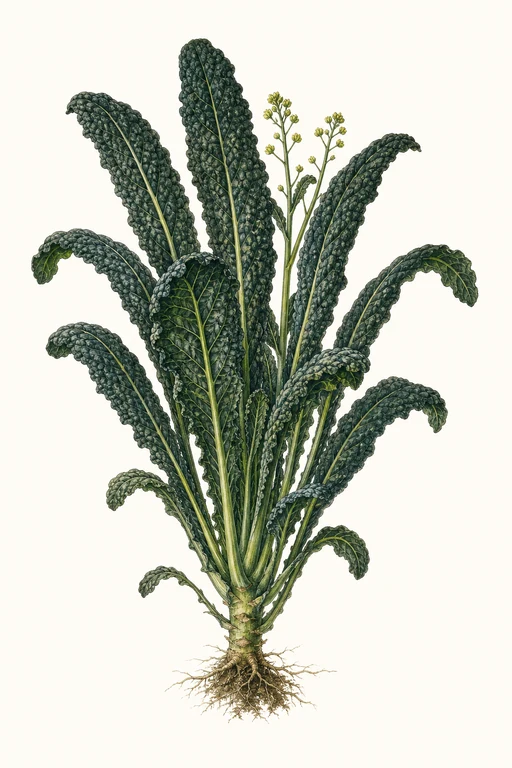
Savory and deeply green, Lacinato kale unfurls into long, narrow leaves with a dramatic, blistered texture that feels almost sculpted in the garden.
Its flavor is rich and earthy with a gentle sweetness, and the leaves stay tender enough for everyday use—ideal for roasting, sautéing, and hearty soups, as well as for fresh salads when you want a bold, leafy crunch. Grow Lacinato for a dependable 50-day harvest and a striking, ornamental look that keeps coming back with new growth.
Light: Full SunMaturity: 50 DaysHabit: Rosette
Planting schedules and alerts are optimized for Columbus (Zone 6b).
Crop Dates
| Milestone | Date |
|---|---|
| Start Indoors | Mar 28th |
| Last Frost | Apr 25th |
| Transplant / Sow Outdoors | Apr 18th |
| Harvest Begins | Jun 7th |
| Harvest Ends | Oct 16th |
Crop Details
| Trait | Value |
|---|---|
| Days to Maturity | 50 |
| Sun Requirements | Full Sun |
| Growth Habit | Rosette |
| Support Needed | None |
| Planting Depth | Normal |
| Germination Temp (°F) | 45 |
| Min Soil Temp (°F) | 45 |
| Min Night Temp (°F) | 28 |
| Harden Off (days) | 6 |
Culinary Notes

Chef's Note
Lacinato’s long, puckered leaves bring an assertive brassica bite that stays toothsome—great when you want kale to contribute texture, not just greenery. Roast or sauté it hot until the edges crisp, then finish with acid and fat so the earthiness reads bright instead of heavy.

Best Uses
- hot sheet-pan roast until edges go lacquered and crisp
- fast sauté with a splash of water to steam-tender then glaze
- sturdy chiffonade for soup—add late so it stays springy
- raw in a bold salad with a heavier, fatty dressing

Flavor Profile

Kitchen Pairings
Frequently Asked Questions
What pests or diseases commonly affect Lacinato (Brassica oleracea var. viridis), and how can I manage them?
How often should I water Lacinato during the main growing phase?
How do I know when Lacinato is ready to harvest?
Sowing Tips

Transplant Conditions
Wait until soil reaches 45°F and nights stay above 28°F before moving outdoors. Harden off for 6 days first.
Expert Note

For best Lacinato flavor, grow through cool weather and avoid prolonged heat—thicker mulch and quick shade can help if summers spike early.