
Ladybird Nasturtium
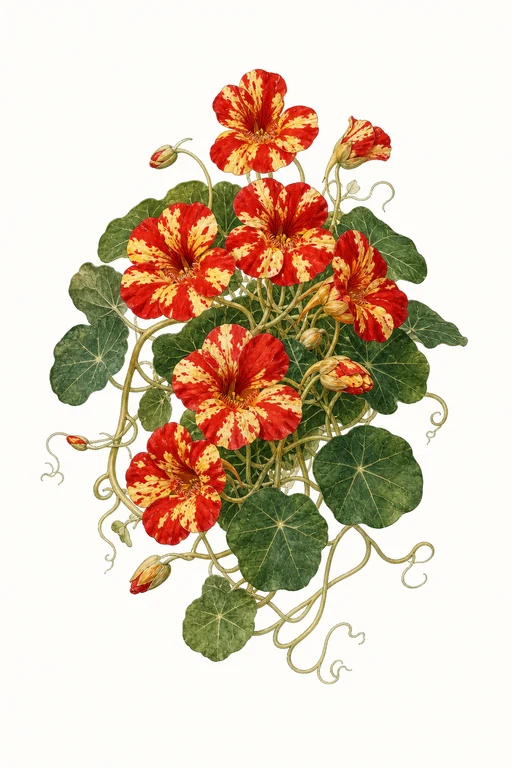
Velvety, jewel-bright blooms arrive in about 50 days, painting the garden with warm scarlet and creamy golden “ladybird” splashes that look almost too vivid to be real.
The petals are tender and pleasantly peppery, with a crisp, succulent bite that shines in fresh arrangements and makes a striking garnish for salads, platters, and springtime color bowls. Let Ladybird Nasturtium sprawl—its flowers and foliage offer a lively, edible-flower harvest all season long.
Light: Full SunMaturity: 50 DaysHabit: Bush
Crop Dates : 2b
| Milestone | Date |
|---|---|
| Start Indoors | Direct Sow |
| Last Frost | May 15th |
| Transplant / Sow Outdoors | May 15th |
| Harvest Begins | Jul 4th |
| Harvest Ends | Aug 25th |
Crop Details
| Trait | Value |
|---|---|
| Days to Maturity | 50 |
| Sun Requirements | Full Sun |
| Growth Habit | Bush |
| Support Needed | None |
| Planting Depth | Normal |
| Germination Temp (°F) | 70 |
| Min Soil Temp (°F) | 55 |
| Min Night Temp (°F) | 40 |
| Harden Off (days) | Not Required |
Culinary Notes

Chef's Note
Ladybird nasturtium blooms hit with a crisp, peppery bite and a velvety petal texture that reads as ‘fresh’ even when the rest of the plate is rich. Use them at the end—heat or heavy dressings can bruise the petals and dull that clean, spicy snap.

Best Uses
- scatter over bitter greens for a peppery snap
- chop into a quick herb-y salad topper with lemony dressing
- float 3–5 petals on yogurt or crème fraîche for color + bite
- garnish spring vegetable platters and keep them crisp (don’t drown in hot sauces)

Flavor Profile

Frequently Asked Questions
What pests or diseases commonly hit Tropaeolum majus (ladybird nasturtium), and how can I fix them?
How often should I water Tropaeolum majus during its main growth, and what soil moisture level should I aim for?
How do I know when Tropaeolum majus is ready to harvest (and what can I harvest at ~50 days)?
Sowing Tips

Transplant Conditions
Wait until soil reaches 55°F and nights stay above 40°F before moving outdoors.
Expert Note

Sow directly after the last spring frost (nasturtiums dislike root disturbance), and expect the first blooms in roughly 6–8 weeks.