
Laurentian
Sweetly earthy and gently nutty, Laurentian rutabaga brings a smooth, velvety richness to the table with a firm, fine-grained bite.
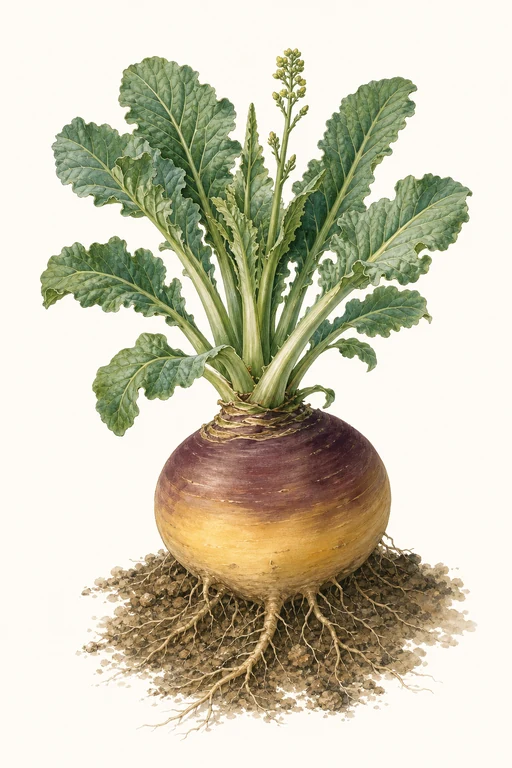
At maturity, the roots develop a handsome shoulder—deep purple-brown fading to warm golden flesh—so they feel as satisfying to grow as they are to savor. Roast for caramelized depth, mash for silky body, or grate for hearty slaws and robust sauces.
Light: Full SunMaturity: 90 DaysHabit: Rosette
Planting schedules and alerts are optimized for Columbus (Zone 6b).
Crop Dates
| Milestone | Date |
|---|---|
| Start Indoors | Direct Sow |
| Last Frost | Apr 25th |
| Transplant / Sow Outdoors | Apr 25th |
| Harvest Begins | Jul 24th |
| Harvest Ends | Oct 16th |
Crop Details
| Trait | Value |
|---|---|
| Days to Maturity | 90 |
| Sun Requirements | Full Sun |
| Growth Habit | Rosette |
| Support Needed | None |
| Planting Depth | Normal |
| Germination Temp (°F) | 45 |
| Min Soil Temp (°F) | 45 |
| Min Night Temp (°F) | 28 |
| Harden Off (days) | Not Required |
Culinary Notes

Chef's Note
Laurentian rutabaga leans sweet-untoasty with a nutty backbone and a fine-grained bite that collapses into silk when heated. It’s the kind of root that stands up to strong seasonings—roast or braise it, then finish with something acidic or smoky to keep it lively.

Best Uses
- roast until the edges caramelize and the interior turns creamy
- mash with butter/cream for a smooth, spoon-coating side
- grate into hearty slaw with sharp dressing
- braise or simmer into thick, spoonable purées

Flavor Profile

Kitchen Pairings
Frequently Asked Questions
What pest or disease is most common on Brassica napus var. napobrassica (turnip/“swede”) and how do I control it?
How often should I water Brassica napus var. napobrassica during the main root-building phase?
How can I tell when my Brassica napus var. napobrassica is ready to harvest?
Sowing Tips

Transplant Conditions
Wait until soil reaches 45°F and nights stay above 28°F before moving outdoors.
Expert Note

Direct sow rutabagas so roots develop undisturbed—transplanting often damages roots and causes misshapen or bitter bulbs.