
Lemon Supreme
Bright lemon-scented foliage leads the way—Lemon Supreme’s leaves release a vivid, citrusy perfume with a crisp, clean snap.
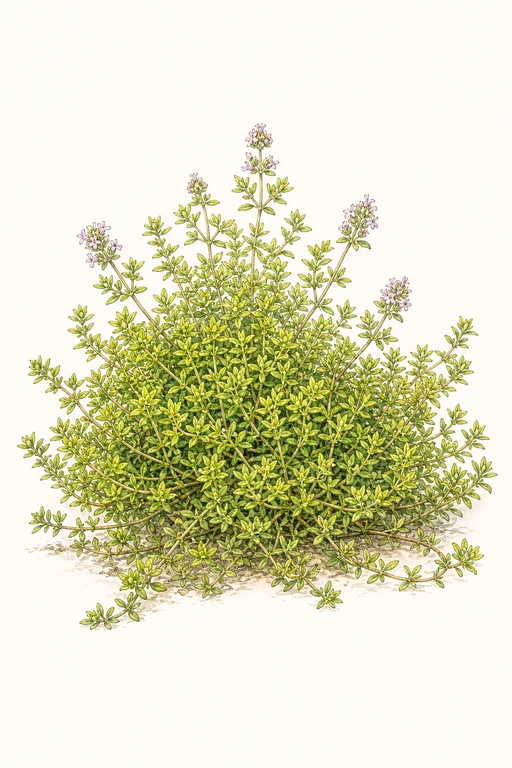
The plants form a tidy, low mound of fine-textured, needlelike leaves that stay aromatic and vibrant through the season, offering a concentrated flavor that shines in fresh bouquets and drying. Ideal for gardeners who want an ornamental herb with bold fragrance, Lemon Supreme is a standout for aromatic teas, sachets, and flavorful infusions.
Light: Full SunMaturity: 60 DaysHabit: Upright
Planting schedules and alerts are optimized for Columbus (Zone 6b).
Crop Dates
| Milestone | Date |
|---|---|
| Start Indoors | Mar 14th |
| Last Frost | Apr 25th |
| Transplant / Sow Outdoors | Jun 6th |
| Harvest Begins | Aug 5th |
| Harvest Ends | Oct 16th |
Crop Details
| Trait | Value |
|---|---|
| Days to Maturity | 60 |
| Sun Requirements | Full Sun |
| Growth Habit | Upright |
| Support Needed | None |
| Planting Depth | Normal |
| Germination Temp (°F) | 70 |
| Min Soil Temp (°F) | 60 |
| Min Night Temp (°F) | 50 |
| Harden Off (days) | 7 |
Culinary Notes

Chef's Note
This lemon thyme earns its keep because the citrus comes through as aroma first, then a sharp, tidy thyme chew—not bitterness. Use it like a finishing herb: steep or soften gently, and it perfumes everything from olive oil to pan juices without turning medicinal.

Best Uses
- brightening herb rubs for chicken, fish, and roasted vegetables
- muddled-in or steeped lemon-thyme infusions for tea and spritz-style drinks
- finishing oils and quick pan sauces (add at the end to keep the citrus perfume intact)
- drying for winter sachets or crush-and-sprinkle seasoning mixes

Flavor Profile

Kitchen Pairings
Frequently Asked Questions
What pest or disease commonly affects Thymus citriodorus (lemon thyme), and how can I fix it?
How often should I water lemon thyme during its main growing phase?
How do I tell when lemon thyme is ready to harvest?
Sowing Tips

Transplant Conditions
Wait until soil reaches 60°F and nights stay above 50°F before moving outdoors. Harden off for 7 days first.
Expert Note

Start seeds indoors for steadier emergence, but harden off gradually and transplant only once nights are reliably warm for best establishment of lemon thyme.