
Lemon Thyme
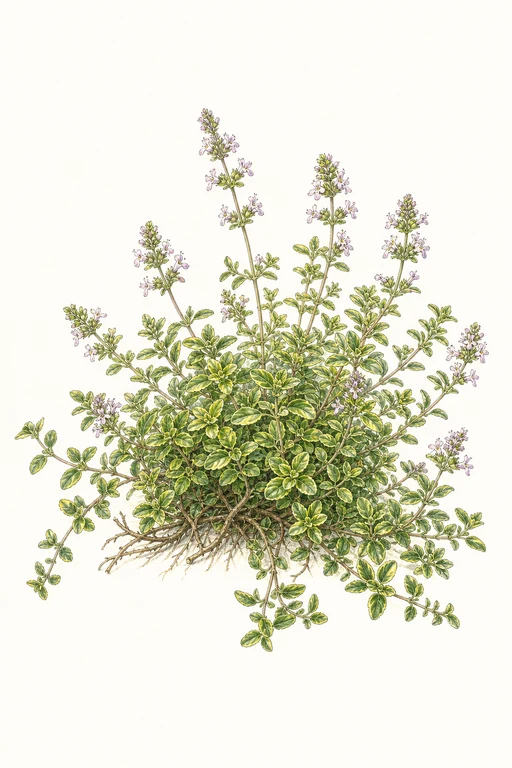
Sunlit lemon fragrance rises the moment you brush Lemon Thyme—bright, zesty, and unmistakably aromatic.
The foliage is fine-textured and evergreen, forming a tidy, low mound of tender stems with small leaves that carry a crisp, lemony snap and a delicate, herbal sweetness. Ideal for fresh bouquets, aromatic infusions, and finishing—its vivid character shines in herb blends, dressings, and pickling accents alike.
Light: Full SunMaturity: 60 DaysHabit: Spreading
Planting schedules and alerts are optimized for Columbus (Zone 6b).
Crop Dates
| Milestone | Date |
|---|---|
| Start Indoors | Feb 28th |
| Last Frost | Apr 25th |
| Transplant / Sow Outdoors | Jun 6th |
| Harvest Begins | Aug 5th |
| Harvest Ends | Oct 16th |
Crop Details
| Trait | Value |
|---|---|
| Days to Maturity | 60 |
| Sun Requirements | Full Sun |
| Growth Habit | Spreading |
| Support Needed | None |
| Planting Depth | Normal |
| Germination Temp (°F) | 70 |
| Min Soil Temp (°F) | 50 |
| Min Night Temp (°F) | 40 |
| Harden Off (days) | 7 |
Culinary Notes

Chef's Note
Lemon thyme tastes like thyme wearing a citrus cologne—fine leaves give you a crisp, lemon-bright bite instead of a heavy pithy bitterness. Use it early for infusions and again at the end for fragrance; it’s a tiny leaf with a big nose, so go light and let it cut through rich proteins and fats.

Best Uses
- infuse cream or olive oil for a lemon-herb base
- stir into vinaigrettes and yogurt sauces—use sparingly so it stays zesty
- fold into quick pickling brines for a clean, aromatic tang
- finish grilled fish or roast chicken with a shower of chopped leaves

Flavor Profile

Kitchen Pairings
Frequently Asked Questions
What pest or disease most commonly affects Thymus citriodorus (lemon thyme), and how do I control it?
How often should I water lemon thyme during its main growth phase?
How can I tell when lemon thyme is ready to harvest (Thymus citriodorus)?
Sowing Tips

Transplant Conditions
Wait until soil reaches 50°F and nights stay above 40°F before moving outdoors. Harden off for 7 days first.
Expert Note

Start lemon thyme early indoors, then harden well and transplant only after nights stay reliably warm for rapid root establishment.