
Lisbon Lemon
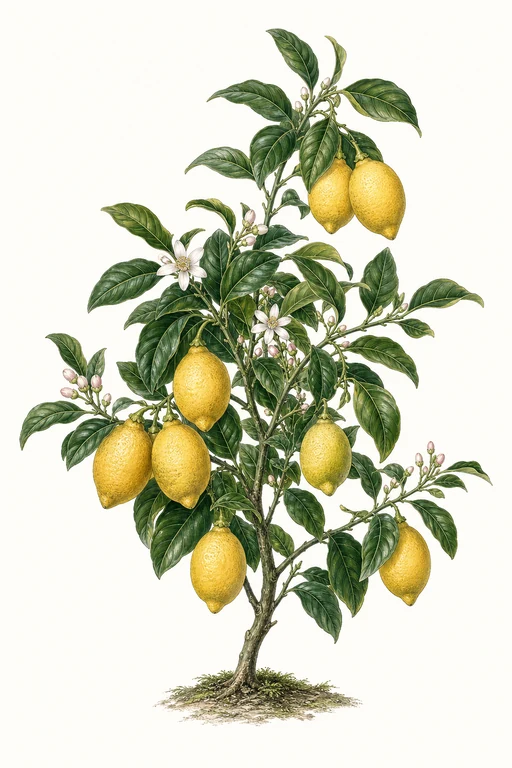
Sunlit and unmistakably fragrant, Lisbon Lemon brings a bright, lemon-zest perfume that seems to rise from the tree itself.
Its fruit ripens to a warm, golden-yellow oval with a smooth, moderately thick rind and a juicy, tangy interior prized for its lively brightness. Grow Lisbon Lemon for year-round confidence in the home landscape—ideal for refreshing drinks, vivid sauces, and sparkling preserves that capture its clean, aromatic character.
Light: Full SunMaturity: 365 DaysHabit: Shrub
Planting schedules and alerts are optimized for Columbus (Zone 6b).
Crop Dates
| Milestone | Date |
|---|---|
| Last Frost | Apr 25th |
| Growing Approach | Protected Environment Only |
Crop Details
| Trait | Value |
|---|---|
| Days to Maturity | 365 |
| Sun Requirements | Full Sun |
| Growth Habit | Shrub |
| Support Needed | None |
| Planting Depth | Normal |
| Germination Temp (°F) | 70 |
| Min Soil Temp (°F) | 60 |
| Min Night Temp (°F) | 50 |
| Harden Off (days) | 10 |
Culinary Notes

Chef's Note
Lisbon Lemon is built for zest: its bright, aromatic tang stays sharp rather than going dull, even when it’s cooked down. Use it where acidity and fragrance can do the work—think curd, sauce, or a quick brine—so the juice keeps singing instead of fading.

Best Uses
- zest-heavy lemon curd or lemon preserves
- hot-and-sour lemon sauces for fish and roast chicken
- sparkling lemonades and shrubs where the aromatics stay crisp
- marinating seafood or quick-pickling for immediate brightness

Flavor Profile

Kitchen Pairings
Frequently Asked Questions
Lisbon lemon — what pest is most likely and how do I treat it?
Lisbon lemon — how often should I water during active growth?
Lisbon lemon — how do I know the fruit is ready to harvest?
Sowing Tips

Transplant Conditions
Wait until soil reaches 60°F and nights stay above 50°F before moving outdoors. Harden off for 10 days first.
Expert Note

For Lisbon-type lemons, the key is warm conditions and consistent moisture—protect young trees from cold and avoid transplant shock by planting in a sunny, well-draining spot immediately after hardening off.