
Little Finger
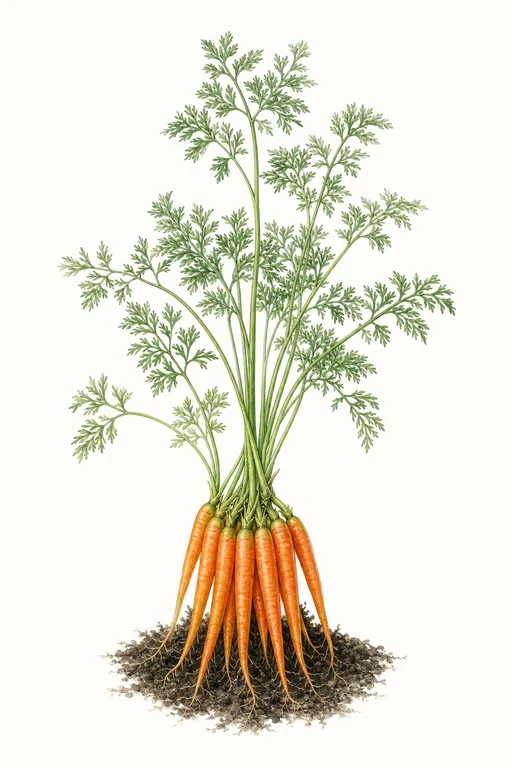
Sweet, crisp, and vividly tender—Little Finger baby carrots arrive with a delightfully snap-forward bite and a clean, carrot-sweet flavor that feels bright even straight from the garden.
Their slender, finger-length roots develop a smooth, fine-grained texture and a warm orange glow that roasts up beautifully, while also shining in fresh salads, quick pickles, and vibrant sauces. Ideal for gardeners who want uniform, bite-size harvests at about 70 days, Little Finger turns every thinning into a harvestable treat.
Light: Full SunMaturity: 70 DaysHabit: Taproot
Crop Dates : 7a
| Milestone | Date |
|---|---|
| Start Indoors | Direct Sow |
| Last Frost | Apr 20th |
| Transplant / Sow Outdoors | Apr 20th |
| Harvest Begins | Jun 29th |
| Harvest Ends | Oct 20th |
Crop Details
| Trait | Value |
|---|---|
| Days to Maturity | 70 |
| Sun Requirements | Full Sun |
| Growth Habit | Taproot |
| Support Needed | None |
| Planting Depth | Surface |
| Germination Temp (°F) | 70 |
| Min Soil Temp (°F) | 45 |
| Min Night Temp (°F) | 35 |
| Harden Off (days) | Not Required |
Culinary Notes

Chef's Note
Little Finger baby carrots are built for texture: they stay fine-grained and snappy, so they don’t turn to wool in a hot pan. Roast them until the edges just bronzify, or pickle them for a sweet-tart crunch that hits like a fresh bite between richer flavors.

Best Uses
- shuck-and-eat raw with salty dip (snap stays loud)
- quick pickles where they keep a snappy bite
- sheet-pan roasting for caramelized edges without turning mushy
- glossy warm salads with butter, herbs, and citrus

Flavor Profile

Frequently Asked Questions
What pest or disease commonly affects Solanum melongena (Little Finger eggplant), and how do I manage it at home?
How often should I water Little Finger eggplant during peak fruiting, and what soil moisture level should I maintain?
How can I tell when Little Finger eggplant (Solanum melongena) is ready to harvest?
Sowing Tips

Transplant Conditions
Wait until soil reaches 45°F and nights stay above 35°F before moving outdoors.
Expert Note

Direct-sow Little Finger baby carrots in consistently moist, finely worked soil (carrot roots hate transplanting).