
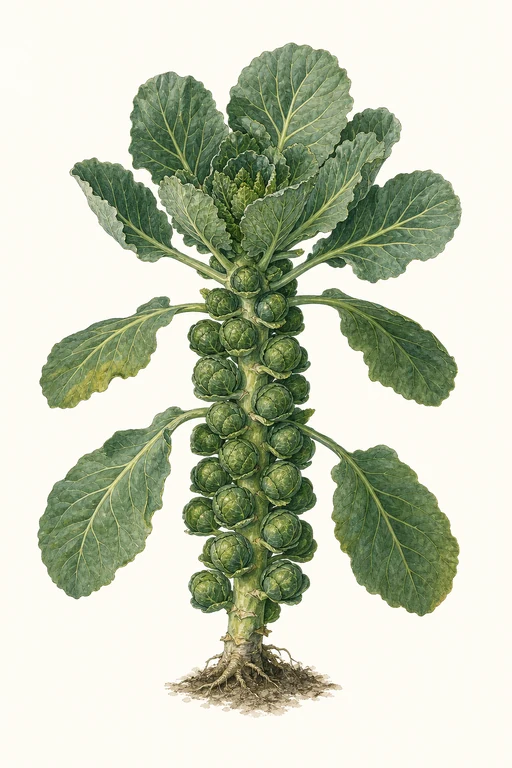
Long Island Improved Brussels Sprout
Savory-sweet and deeply satisfying, Long Island Improved Brussels Sprout forms tight, jewel-like heads that turn rich green as the weather cools.
Expect a firm, crisp bite with a tender core—ideal for roasting to bring out a mellow, nutty richness, or for fresh braises and hearty skillet-style preparations. A classic cool-season favorite with dependable, uniform set over a long harvest window, it’s a rewarding choice for gardeners who love vegetables that taste even better after a chill.
Light: Full SunMaturity: 90 DaysHabit: Upright
Planting schedules and alerts are optimized for Columbus (Zone 6b).
Crop Dates
| Milestone | Date |
|---|---|
| Start Indoors | Mar 21st |
| Last Frost | Apr 25th |
| Transplant / Sow Outdoors | Apr 25th |
| Harvest Begins | Jul 24th |
| Harvest Ends | Oct 16th |
Crop Details
| Trait | Value |
|---|---|
| Days to Maturity | 90 |
| Sun Requirements | Full Sun |
| Growth Habit | Upright |
| Support Needed | None |
| Planting Depth | Normal |
| Germination Temp (°F) | 45 |
| Min Soil Temp (°F) | 40 |
| Min Night Temp (°F) | 28 |
| Harden Off (days) | 6 |
Culinary Notes

Chef's Note
These tight, uniform little heads are built for roasting: the outsides stay snappy while the centers go tender and nutty, not sulfurous. When you hit them with fat plus acid—like bacon/cheese/brown butter and lemon—they taste clean and deep, like winter comfort without heaviness.

Best Uses
- high-heat roasting until the leaves bronze at the edges
- quick skillet braise with a splash of broth/wine to soften the core
- shaved or halved for sheet-pan crisping before finishing with butter or vinaigrette

Flavor Profile

Kitchen Pairings
Frequently Asked Questions
What pest or disease most often affects Brassica oleracea var. gemmifera (Brussels sprouts), and what should I do first?
How often should I water Brussels sprouts during the main growing phase (around head/bud formation)?
How can I tell when long Island Improved Brussels sprouts are ready to harvest?
Sowing Tips

Transplant Conditions
Wait until soil reaches 40°F and nights stay above 28°F before moving outdoors. Harden off for 6 days first.
Expert Note

For best flavor, let Brussels sprout through a light frost before heavy harvests—cool weather boosts sweetness.