
Long Purple
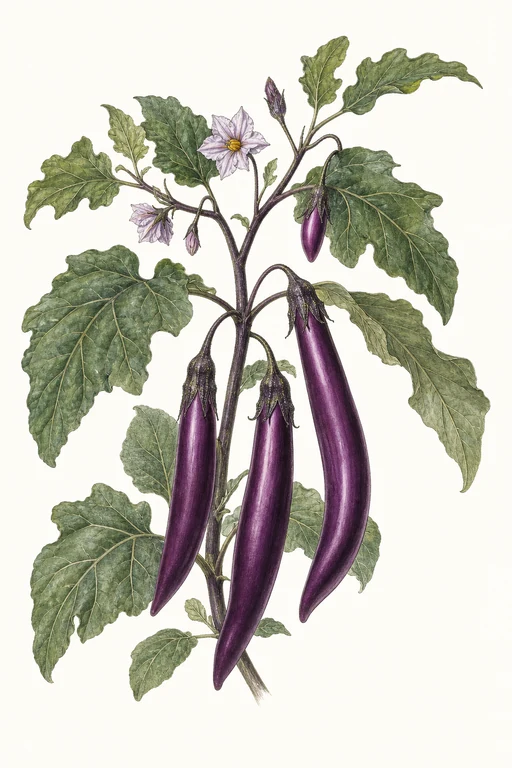
Plush, ink-purple fruit hangs in graceful, elongated silhouettes—silky-skinned and richly flavored with a gentle, savory depth.
“Long Purple” delivers tender, creamy flesh that stays pleasantly smooth, ideal for high-heat roasting and glossy sauces, and it also shines when sliced fresh for quick pickling-style preparations. A Japanese eggplant favorite for gardeners who want an elegant harvest that looks as striking as it tastes.
Light: Full SunMaturity: 90 DaysHabit: Upright
Planting schedules and alerts are optimized for Columbus (Zone 6b).
Crop Dates
| Milestone | Date |
|---|---|
| Start Indoors | Mar 7th |
| Last Frost | Apr 25th |
| Transplant / Sow Outdoors | Jun 20th |
| Harvest Begins | Sep 18th |
| Harvest Ends | Oct 16th |
Crop Details
| Trait | Value |
|---|---|
| Days to Maturity | 90 |
| Sun Requirements | Full Sun |
| Growth Habit | Upright |
| Support Needed | Stake |
| Planting Depth | Normal |
| Germination Temp (°F) | 80 |
| Min Soil Temp (°F) | 60 |
| Min Night Temp (°F) | 50 |
| Harden Off (days) | 7 |
Culinary Notes

Chef's Note
Long Purple’s elongated Japanese cut keeps a velvety, low-fiber interior, so it turns buttery in the oven without going spongy. Roast hot and don’t overwater it—its mild sweetness and savory savoriness love salty-sour partners like soy, miso, and vinegar.

Best Uses
- high-heat roasting until melting and bronzed at the edges
- glossy, reduced sauces (miso- or tomato-based) that cling to tender interiors
- long, thin slices for quick pickling-style applications (salt–vinegar, overnight)
- grilling or broiling for a smoky, custardy bite

Flavor Profile

Kitchen Pairings
Frequently Asked Questions
What pest or disease most commonly affects eggplant (Solanum melongena) and what should I do?
How often should I water eggplant during the main growing phase?
How can I tell when ‘Long Purple’ eggplant (Solanum melongena) is ready to harvest?
Sowing Tips

Transplant Conditions
Wait until soil reaches 60°F and nights stay above 50°F before moving outdoors. Harden off for 7 days first.
Expert Note

Use soil temps of 60°F+ and keep seedlings from drying out early—eggplant is sensitive to cold and uneven moisture.