
Lucullus
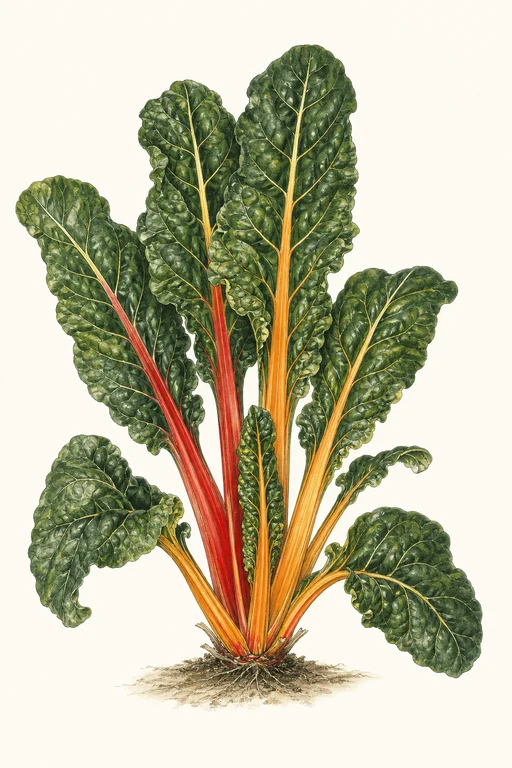
Tender, jewel-bright leaves unfurl with a velvety sheen and a crisp, succulent bite—Lucullus Swiss chard brings a richly earthy sweetness with a gentle, clean finish.
The broad, upright foliage forms an elegant rosette, while the stems offer striking color that deepens as the plants mature. Grow Lucullus for standout fresh salads, quick sautéing, and vibrant sauces that showcase its lush texture and vivid character.
Light: Full SunMaturity: 55 DaysHabit: Rosette
Planting schedules and alerts are optimized for Columbus (Zone 6b).
Crop Dates
| Milestone | Date |
|---|---|
| Start Indoors | Mar 28th |
| Last Frost | Apr 25th |
| Transplant / Sow Outdoors | Apr 25th |
| Harvest Begins | Jun 19th |
| Harvest Ends | Oct 16th |
Crop Details
| Trait | Value |
|---|---|
| Days to Maturity | 55 |
| Sun Requirements | Full Sun |
| Growth Habit | Rosette |
| Support Needed | None |
| Planting Depth | Normal |
| Germination Temp (°F) | 65 |
| Min Soil Temp (°F) | 40 |
| Min Night Temp (°F) | 30 |
| Harden Off (days) | 6 |
Culinary Notes

Chef's Note
Lucullus chard gives you jewel-bright sweetness with a clean, non-aggressive finish, plus a two-texture experience—velvety leaf and crisp stem. It’s the kind of leafy green that stays elegant and colorful whether you hit it with heat for a minute or keep it fresh for a salad under sharp citrus.

Best Uses
- quick sauté in a hot pan so the leaves stay plush and the stems stay snappy
- blanch-and-squeeze for a glossy, spinach-like base in sides and grain bowls
- vibrant stem-forward sauces where the color deepens and thickens slightly on reduction
- fresh salads where the leaves hold dressing without going limp

Flavor Profile

Kitchen Pairings
Frequently Asked Questions
What pest or disease problem is most common on Swiss chard (Beta vulgaris var. cicla), and how do I treat it?
How often should I water Swiss chard during the main growing phase, and what soil moisture level should I maintain?
How can I tell when Swiss chard (Beta vulgaris var. cicla) is ready to harvest?
Sowing Tips

Transplant Conditions
Wait until soil reaches 40°F and nights stay above 30°F before moving outdoors. Harden off for 6 days first.
Expert Note

For best flavor, keep plants evenly moist and harvest outer leaves regularly so the crown keeps producing.