
Magres
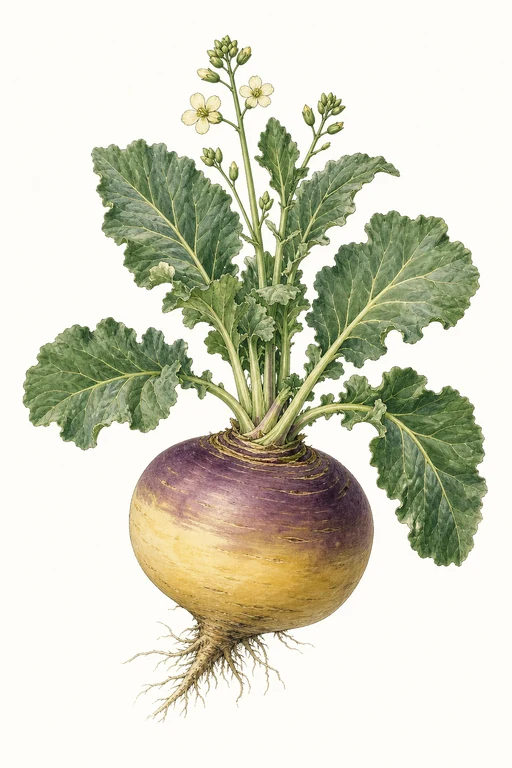
Sweetly earthy and gently peppered, Magres rutabaga forms a smooth, uniform bulb with a rich, warm interior that tastes like a mellowed root—never harsh.
The flesh stays tender and fine-grained, holding its integrity for roasting and mashing, and it also shines when sliced for hearty braises and robust winter-style sides. Grow Magres for a dependable 90-day harvest and a satisfying, velvety bite that turns cold-weather meals into comfort.
Light: Full SunMaturity: 90 DaysHabit: Rosette
Planting schedules and alerts are optimized for Columbus (Zone 6b).
Crop Dates
| Milestone | Date |
|---|---|
| Start Indoors | Direct Sow |
| Last Frost | Apr 25th |
| Transplant / Sow Outdoors | Apr 25th |
| Harvest Begins | Jul 24th |
| Harvest Ends | Oct 16th |
Crop Details
| Trait | Value |
|---|---|
| Days to Maturity | 90 |
| Sun Requirements | Full Sun |
| Growth Habit | Rosette |
| Support Needed | None |
| Planting Depth | Normal |
| Germination Temp (°F) | 45 |
| Min Soil Temp (°F) | 40 |
| Min Night Temp (°F) | 28 |
| Harden Off (days) | Not Required |
Culinary Notes

Chef's Note
Magres rutabaga tastes like winter root that’s been softened—sweet earth with a restrained pepper bite—so it doesn’t need a lot of rescue. Roast or mash it and you’ll get that velvety, fine-grained texture that holds its shape in braises instead of turning watery.

Best Uses
- roasting wedges until caramel-browned at the edges while the center goes buttery
- mashing for a smooth, spoonable mash (no harshness)
- braising slices in a hearty, low-simmer sauce
- thickening soups and stews for a creamy body without dairy

Flavor Profile

Frequently Asked Questions
What’s a common pest or disease issue for Brassica napus var. napobrassica (magres), and how do I treat it?
How often should I water magres during the main growing phase (root bulbing)?
How can I tell when magres is ready to harvest?
Sowing Tips

Transplant Conditions
Wait until soil reaches 40°F and nights stay above 28°F before moving outdoors.
Expert Note

For uniform, smooth rutabaga roots, keep soil evenly moist and avoid letting seedlings get stressed after emergence.