
Mancan Buckwheat
Warm, nutty fragrance rises from Mancan Buckwheat as soon as the grains begin to swell—an aromatic promise that feels both earthy and bright.
At maturity, the seed fills with a firm, pleasantly chewy character, ideal for hearty grain bowls and robust blends, with a flavor that stands up beautifully in warm preparations. Grow Mancan for a dependable, cool-season crop that rewards the patient gardener with richly flavored harvests in about 55 days.
Light: Full SunMaturity: 55 DaysHabit: Upright
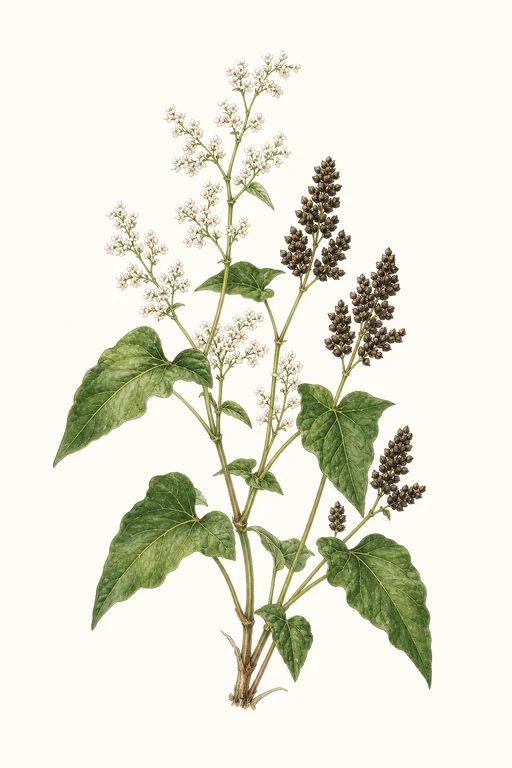
Planting schedules and alerts are optimized for Columbus (Zone 6b).
Crop Dates
| Milestone | Date |
|---|---|
| Start Indoors | Direct Sow |
| Last Frost | Apr 25th |
| Transplant / Sow Outdoors | Apr 25th |
| Harvest Begins | Jun 19th |
| Harvest Ends | Oct 16th |
Crop Details
| Trait | Value |
|---|---|
| Days to Maturity | 55 |
| Sun Requirements | Full Sun |
| Growth Habit | Upright |
| Support Needed | None |
| Planting Depth | Normal |
| Germination Temp (°F) | 60 |
| Min Soil Temp (°F) | 55 |
| Min Night Temp (°F) | 45 |
| Harden Off (days) | Not Required |
Culinary Notes

Chef's Note
Mancan buckwheat brings an aggressively fragrant, toasted-nut lift and a chew that holds up in warm bowls and pilafs. It’s also well-suited to blending because its earth-tang doesn’t disappear when you toast or simmer it.

Best Uses
- hot grain bowls where it stays toothsome (not mushy)
- dry-toasted buckwheat pilaf with butter or olive oil
- hearty buckwheat blend (mix with oats, barley, or rice for different chew)
- grind-and-use for soba-style noodles or buckwheat pancakes

Flavor Profile

Kitchen Pairings
Frequently Asked Questions
What pest or disease most often affects Fagopyrum esculentum (buckwheat) and what should I do?
How often should I water Fagopyrum esculentum during active growth?
How can I tell when to harvest Fagopyrum esculentum?
Sowing Tips

Transplant Conditions
Wait until soil reaches 55°F and nights stay above 45°F before moving outdoors.
Expert Note

Direct-sow after frost when the soil is warm, and keep it lightly moist until emergence so it can quickly establish as a nectar source for beneficial insects.