
Margaret
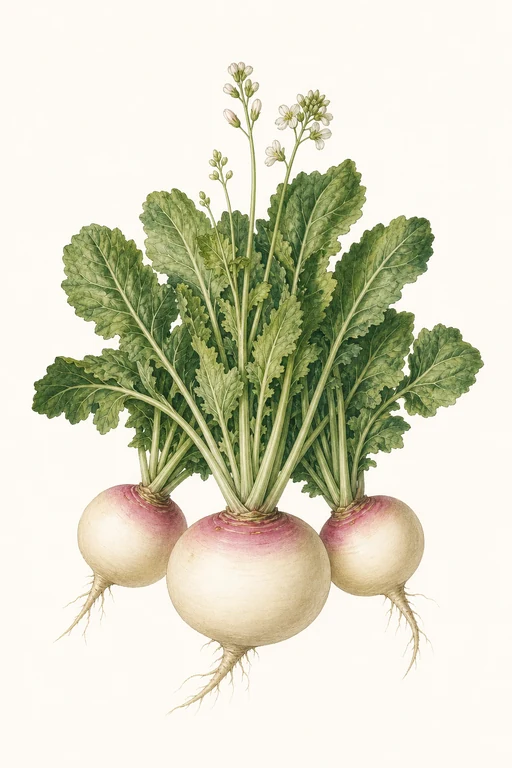
Sweetly earthy and gently peppered, Margaret turnips mature in about 45 days to offer a tender, fine-grained bite with a crisp, juicy texture.
Their smooth, creamy-white shoulders with soft blush overtones develop a pleasing, uniform shape that stays pleasantly mild—ideal for showcasing their natural flavor in fresh salads, quick-roasted sides, and savory braises, as well as tangy pickles and bright sauces.
Light: Full SunMaturity: 45 DaysHabit: Rosette
Planting schedules and alerts are optimized for Columbus (Zone 6b).
Crop Dates
| Milestone | Date |
|---|---|
| Start Indoors | Direct Sow |
| Last Frost | Apr 25th |
| Transplant / Sow Outdoors | Apr 25th |
| Harvest Begins | Jun 9th |
| Harvest Ends | Oct 16th |
Crop Details
| Trait | Value |
|---|---|
| Days to Maturity | 45 |
| Sun Requirements | Full Sun |
| Growth Habit | Rosette |
| Support Needed | None |
| Planting Depth | Normal |
| Germination Temp (°F) | 45 |
| Min Soil Temp (°F) | 40 |
| Min Night Temp (°F) | 28 |
| Harden Off (days) | Not Required |
Culinary Notes

Chef's Note
Margaret turnips are built for the spotlight: tender, fine-grained, and mildly peppery, so they don’t need heavy-handed seasoning to taste “turnip.” Roast or braise them just until the edges bronze and the centers turn tender-crisp—then finish with acid (lemon/vinegar) to sharpen their sweet earth.

Best Uses
- raw or shaved salad where the turnip keeps crunch under a light vinaigrette
- quick-roasted wedges that caramelize at the edges without turning woody
- pan-sizzled turnip medallions finished with butter and lemon
- tangy quick pickles or brined slices that stay crisp

Flavor Profile

Frequently Asked Questions
What’s a common pest or disease for Brassica rapa (turnip) and how do I treat it at home?
How often should I water Brassica rapa during the main growing phase?
How can I tell when my Brassica rapa (turnip) is ready to harvest?
Sowing Tips

Transplant Conditions
Wait until soil reaches 40°F and nights stay above 28°F before moving outdoors.
Expert Note

For the sweetest, mildest turnips, grow in cool weather and harvest before roots get much larger than a golf ball.