
Marionberry
Marionberry bursts with a velvety, dark berry perfume—sweet-tart at first breath, then richly winey on the finish.
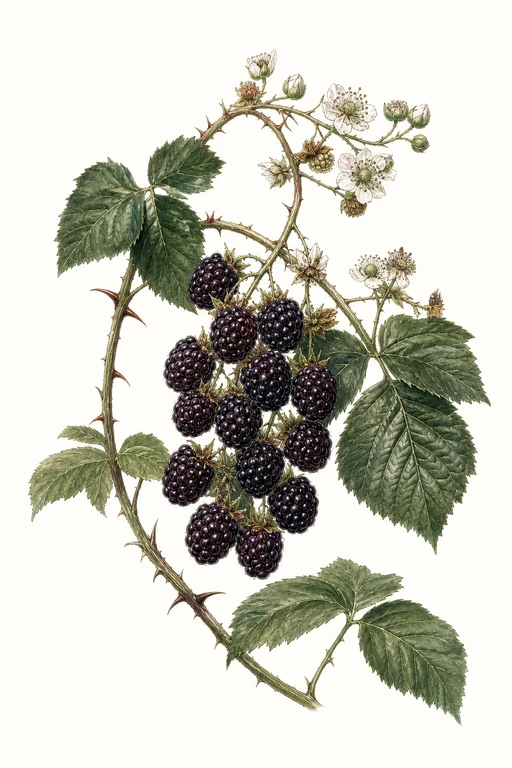
At maturity, the fruit forms medium-to-large clusters of deep garnet-black drupes with a satin bloom and a juicy, tender bite that’s wonderfully aromatic. Grow Marionberry for abundant harvests that shine in fresh bowls, luscious sauces, and deep-colored preserves.
Light: Full SunMaturity: 365 DaysHabit: Vine
Planting schedules and alerts are optimized for Columbus (Zone 6b).
Crop Dates
| Milestone | Date |
|---|---|
| Last Frost | Apr 25th |
| Growing Approach | Protected Environment Only |
Crop Details
| Trait | Value |
|---|---|
| Days to Maturity | 365 |
| Sun Requirements | Full Sun |
| Growth Habit | Vine |
| Support Needed | Trellis |
| Planting Depth | Normal |
| Germination Temp (°F) | 70 |
| Min Soil Temp (°F) | 45 |
| Min Night Temp (°F) | 40 |
| Harden Off (days) | 7 |
Culinary Notes

Chef's Note
Marionberry’s soft, juicy drupe gives you that fragrant, winey finish without turning gritty—so it stays elegant in sauces and doesn’t disappear in preserves. It’s built for quick cooks where you preserve aromatics, then thickens into a glossy, garnet-colored ribbon.

Best Uses
- cooked-down sauce for cheesecake or vanilla desserts
- jam/preserve where the seeds stay pleasantly noticeable
- fresh bowls with minimal sugar (let the winey finish show)
- deep-color reduction for glaze on pork or duck

Flavor Profile

Kitchen Pairings
Frequently Asked Questions
What disease is most likely on marionberry (Rubus subgenus Rubus) and how can I control it?
How often should I water marionberry during the main growing season?
How do I know when marionberries are ready to harvest?
Sowing Tips

Transplant Conditions
Wait until soil reaches 45°F and nights stay above 40°F before moving outdoors. Harden off for 7 days first.
Expert Note

Plant Marionberry in full sun with well-drained soil and train canes to a trellis the first season to establish an efficient fruiting system.