
Masquerade
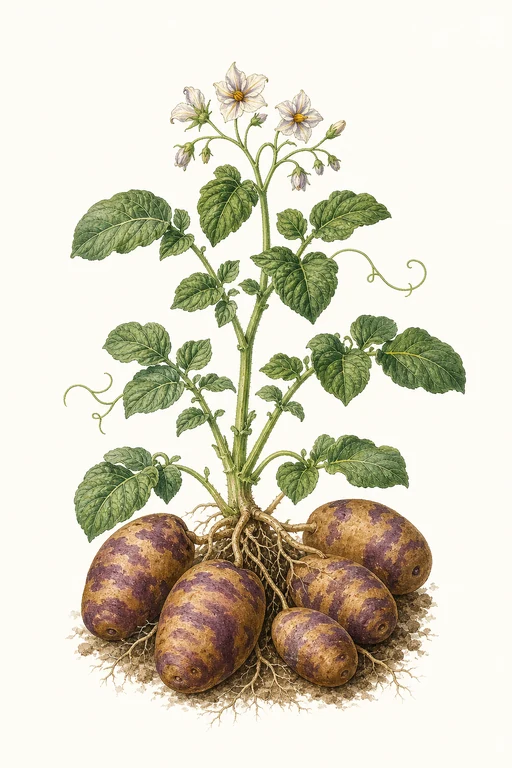
Masquerade brings a dramatic, heirloom palette to the garden—deep russet-brown skin washed with bold, masquerade-like streaks and splashes of violet-tinged purple.
When baked to tenderness, the flesh turns creamy and buttery, with a fine-grained bite that’s equally inviting for roasting and pan-crisping, as well as for velvety mashes and rustic sauces. Grow Masquerade for the thrill of harvest: every tuber feels like a small, living artwork ready to be showcased on the table.
Light: Full SunMaturity: 90 DaysHabit: Clumping
Location not set yet
Location not set yet
Enter your ZIP for local crop dates
Masquerade Planting Dates by USDA Zone
Estimated US hardiness-zone windows for sow, transplant, and harvest. Enter a US ZIP above for exact local dates, or open a zone below.
| Zone | Start Indoors | Sow / Transplant | Harvest |
|---|---|---|---|
| Zone 1a | Protected Environment Only | ||
| Zone 1b | Protected Environment Only | ||
| Zone 2a | Direct Sow | May 25th | Aug 23rd – Aug 29th |
| Zone 2b | Direct Sow | May 15th | Aug 13th – Aug 25th |
| Zone 3a | Direct Sow | May 15th | Aug 13th – Sep 1st |
| Zone 3b | Direct Sow | May 19th | Aug 17th – Sep 21st |
| Zone 4a | Direct Sow | May 15th | Aug 13th – Sep 24th |
| Zone 4b | Direct Sow | May 13th | Aug 11th – Sep 27th |
| Zone 5a | Direct Sow | May 8th | Aug 6th – Sep 30th |
| Zone 5b | Direct Sow | May 4th | Aug 2nd – Oct 5th |
| Zone 6a | Direct Sow | May 1st | Jul 30th – Oct 10th |
| Zone 6b | Direct Sow | Apr 25th | Jul 24th – Oct 16th |
| Zone 7a | Direct Sow | Apr 20th | Jul 19th – Oct 20th |
| Zone 7b | Direct Sow | Apr 10th | Jul 9th – Oct 28th |
| Zone 8a | Direct Sow | Apr 1st | Jun 30th – Nov 5th |
| Zone 8b | Direct Sow | Mar 23rd | Jun 21st – Nov 12th |
| Zone 9a | Direct Sow | Mar 6th | Jun 4th – Nov 26th |
| Zone 9b | Direct Sow | Feb 9th | May 10th – Dec 9th |
| Zone 10a | Continuous Production | ||
| Zone 10b | Continuous Production | ||
| Zone 11a | Continuous Production | ||
| Zone 11b | Continuous Production | ||
| Zone 12a | Continuous Production | ||
| Zone 12b | Continuous Production | ||
| Zone 13a | Continuous Production | ||
| Zone 13b | Continuous Production | ||
Crop Details
| Trait | Value |
|---|---|
| Days to Maturity | 90 |
| Sun Requirements | Full Sun |
| Growth Habit | Clumping |
| Support Needed | None |
| Planting Depth | Normal |
| Germination Temp (°F) | 55 |
| Min Soil Temp (°F) | 45 |
| Min Night Temp (°F) | 28 |
| Harden Off (days) | Not Required |
Culinary Notes

Chef's Note
Masquerade’s fine-grained starches turn tender fast, so it gives you that creamy, buttery mouthfeel without turning gluey. Bake or pan-crisp it for contrast—deeply browned skin with an interior that mashes into silk, holding sauce instead of weeping it away.

Best Uses
- roast for crisp edges with a creamy center
- pan-crisp (smashed or sliced) for shatter-crust textures
- velvety mash with warm butter and salt
- rustic potato sauces or gratin where it melts into silk

Flavor Profile

Frequently Asked Questions
What disease should I watch for in Solanum tuberosum (potato), and how do I prevent it?
How often should I water Solanum tuberosum during the main growing phase, and what soil moisture level is ideal?
How can I tell when Solanum tuberosum is ready to harvest?
Sowing Tips

Transplant Conditions
Wait until soil reaches 45°F and nights stay above 28°F before moving outdoors.
Expert Note

Plant certified seed potatoes after soil warms and keep plants evenly hilled (and consistently watered) to prevent greening and boost yield.