
Mayan Drums
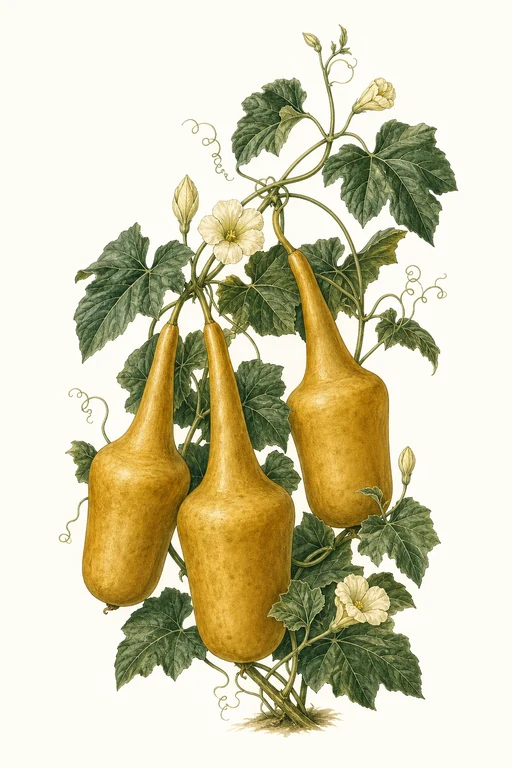
Listen for the deep, resonant promise of Mayan Drums—bottle gourds that mature into tall, rhythmic forms with a smooth, waxy skin and a rich, mature color that reads like warm straw to deep golden tan.
The flesh is tender when young, with a mild, clean flavor and a pleasantly yielding bite that invites gentle preparation and bright pairings. Grow Mayan Drums for its distinctive drum-like silhouette and dependable vining performance, ideal for fresh use and for crafting into flavorful, versatile culinary vessels as the season stretches to 120 days.
Light: Full SunMaturity: 120 DaysHabit: Vine
Planting schedules and alerts are optimized for Columbus (Zone 6b).
Crop Dates
| Milestone | Date |
|---|---|
| Start Indoors | Mar 28th |
| Last Frost | Apr 25th |
| Transplant / Sow Outdoors | Apr 11th |
| Harvest Begins | Aug 9th |
| Harvest Ends | Oct 16th |
Crop Details
| Trait | Value |
|---|---|
| Days to Maturity | 120 |
| Sun Requirements | Full Sun |
| Growth Habit | Vine |
| Support Needed | Trellis |
| Planting Depth | Normal |
| Germination Temp (°F) | 75 |
| Min Soil Temp (°F) | 65 |
| Min Night Temp (°F) | 55 |
| Harden Off (days) | 12 |
Culinary Notes

Chef's Note
Mayan Drums bottle gourds are the kind of mild, clean canvas that stays tender and pleasantly yielding if you don’t overcook—salt early, then go hot and fast. Use bold aromatics and citrus or creamy coconut so the gourd reads flavorful, not watery, and it’s equally at home in a stir-fry or a vessel-style presentation.

Best Uses
- quick sauté or stir-fry of young flesh, cut into thin moons for snappy-tender texture
- stewing with assertive aromatics (gives it something to sing without losing its soft bite)
- grilling/roasting wedges—steam-tender inside, lightly browned edges
- turning it into a hollowed ‘vessel’ for hot fillings, then slicing for serving

Flavor Profile

Frequently Asked Questions
Why are my Lagenaria siceraria (Mayan Drums) vines suddenly wilting or showing powdery patches, and how do I fix it?
How often should I water Mayan Drums during active vine growth to keep fruit developing well?
When are Mayan Drums (Lagenaria siceraria) ready to harvest, and what signs tell me to cut them now?
Sowing Tips

Transplant Conditions
Wait until soil reaches 65°F and nights stay above 55°F before moving outdoors. Harden off for 12 days first.

Direct Sow Preferred
Sensitive roots — does not transplant well. If starting indoors, use biodegradable pots and disturb roots as little as possible when moving outdoors.
Expert Note

Warm the soil well and keep steady moisture after transplanting—bottle gourds hate cold roots and will stall if stressed early.