
Merengo
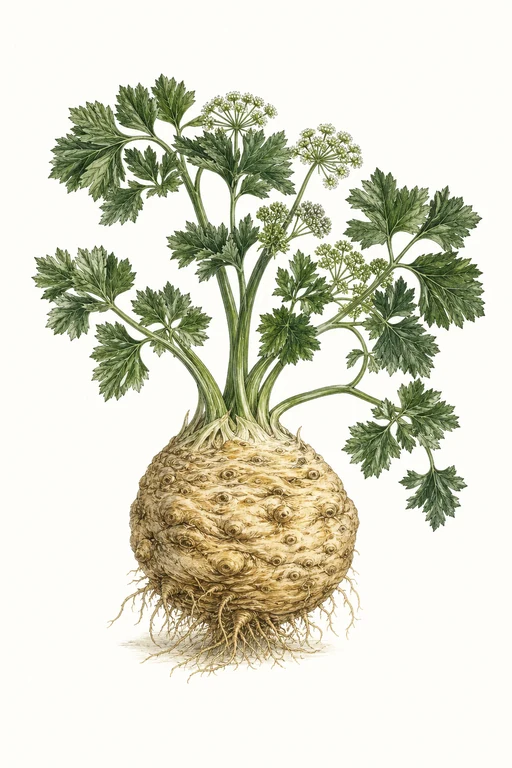
Aromatic and deeply satisfying, Merengo celeriac forms an elegant, knobbly crown with a creamy, ivory interior and a crisp, fine-grained bite.
Its flavor is bold yet refined—earthy celery depth with a gentle sweetness—making it a standout for roasting, purees, and velvety sauces, as well as for fresh grating. Grow Merengo for a long, steady season that rewards patience with a harvest-ready root at about 120 days, ideal for the home gardener who loves distinctive, garden-grown character.
Light: Part SunMaturity: 120 DaysHabit: Upright
Planting schedules and alerts are optimized for Columbus (Zone 6b).
Crop Dates
| Milestone | Date |
|---|---|
| Start Indoors | Feb 14th |
| Last Frost | Apr 25th |
| Transplant / Sow Outdoors | Apr 18th |
| Harvest Begins | Aug 16th |
| Harvest Ends | Oct 16th |
Crop Details
| Trait | Value |
|---|---|
| Days to Maturity | 120 |
| Sun Requirements | Part Sun |
| Growth Habit | Upright |
| Support Needed | None |
| Planting Depth | Normal |
| Germination Temp (°F) | 70 |
| Min Soil Temp (°F) | 45 |
| Min Night Temp (°F) | 35 |
| Harden Off (days) | 7 |
Culinary Notes

Chef's Note
Merengo’s knobbly root turns luxuriously creamy when roasted or simmered, with celery’s signature snap underneath instead of disappearing. It’s the kind of celeriac that holds its flavor in a velvety puree or a hot sauce, and still gives a crisp, aromatic bite when grated raw.

Best Uses
- roasted wedges or batons until caramelized at the edges, then smashed for a spoonable side
- silky celeriac puree to anchor rich mains—smooth without tasting gluey
- velvety celeriac velouté or cream sauce that clings to pasta
- fresh grating for snappy salads with acidic dressings

Flavor Profile

Frequently Asked Questions
What disease or pest commonly affects celery root (Apium graveolens var. rapaceum), and how can I control it?
How often should I water celery root during its main growth phase (after thinning/establishment)?
How do I know when celery root is ready to harvest (Apium graveolens var. rapaceum)?
Sowing Tips

Transplant Conditions
Wait until soil reaches 45°F and nights stay above 35°F before moving outdoors. Harden off for 7 days first.
Expert Note

Start celery early under lights and transplant only when nights are consistently warm, then keep soil evenly moist to maintain tender stalks.