
Milady Mix
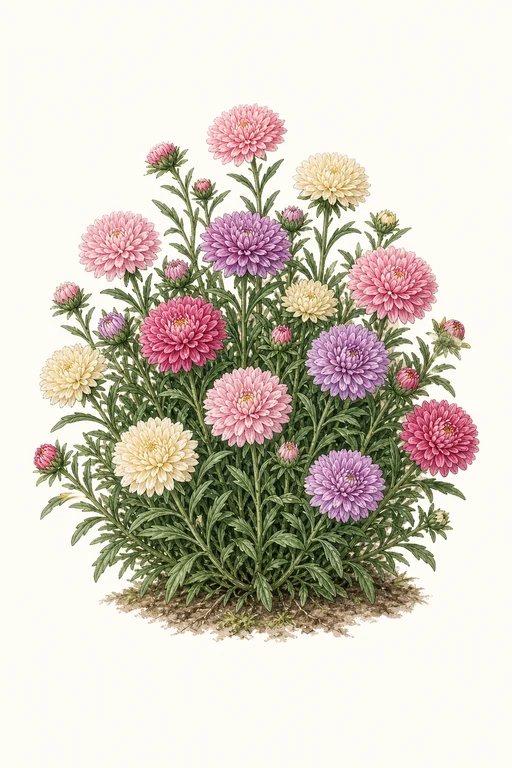
A profusion of velvety, daisy-like double blooms arrives in a cheerful, compact show—each head a soft swirl of color that seems to glow in the garden.
Milady Mix offers a delightful range of warm and cool shades, with crisp, tidy petals that hold their shape as the plants mature. Ideal for edging, containers, and long-lasting color beds, this dwarf double aster brings a bright, garden-ready spectacle from midsummer into early fall.
Light: Full SunMaturity: 90 DaysHabit: Bush
Planting schedules and alerts are optimized for Columbus (Zone 6b).
Crop Dates
| Milestone | Date |
|---|---|
| Start Indoors | Mar 14th |
| Last Frost | Apr 25th |
| Transplant / Sow Outdoors | Apr 25th |
| Harvest Begins | Jul 24th |
| Harvest Ends | Oct 16th |
Crop Details
| Trait | Value |
|---|---|
| Days to Maturity | 90 |
| Sun Requirements | Full Sun |
| Growth Habit | Bush |
| Support Needed | None |
| Planting Depth | Normal |
| Germination Temp (°F) | 65 |
| Min Soil Temp (°F) | 55 |
| Min Night Temp (°F) | 50 |
| Harden Off (days) | 7 |
Culinary Notes

Chef's Note
Milady Mix dwarf double aster is an edible-flower type that keeps its shape and reads more dainty and perfumed than leafy—use it cold so the petals stay velvety and crisp. The flavor is subtle, so it likes bright acids and sweet aromas (lemon, honey, berries) more than heavy, cooked sauces.

Best Uses
- ice-cold garnish on chilled drinks and sparkling water
- paper-thin petal scatter over salads for texture pop
- brief steep for a delicate, floral syrup to finish fruit
- quick press-in topping for petit fours and shortbread

Flavor Profile

Kitchen Pairings
Frequently Asked Questions
What pest or disease problem is most common on Callistephus chinensis (aster) and how do I manage it?
How often should I water Callistephus chinensis during its main growing phase?
How can I tell when Callistephus chinensis is ready to harvest for cut flowers?
Sowing Tips

Transplant Conditions
Wait until soil reaches 55°F and nights stay above 50°F before moving outdoors. Harden off for 7 days first.
Expert Note

Start indoors early for the longest bloom window, but transplant only after consistently mild conditions (or grow as a direct-sown annual in warmer regions).