
Mizuna 'Asian Mix'
Tender, peppery leaves unfurl with a lively, garden-fresh snap—an Asian Mix that brings a pleasing blend of mild-to-bold bite in every handful.
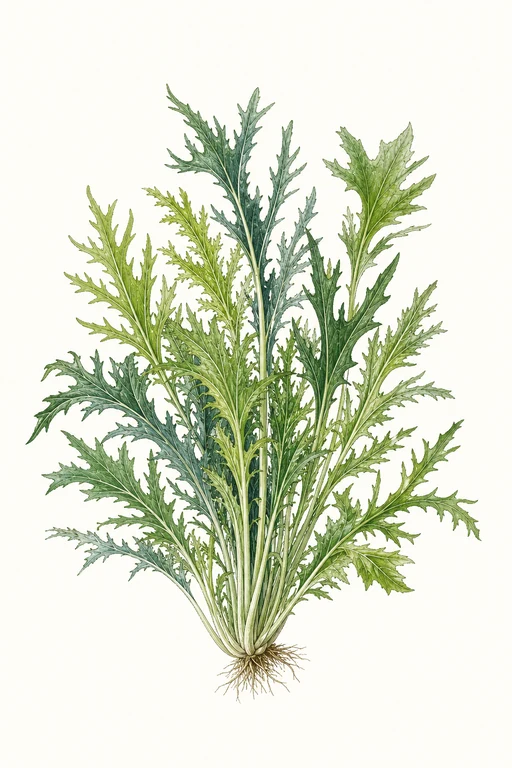
The foliage is finely cut and feathery, yet substantial enough to hold its shape, making it a delight for quick stir-ins and vibrant salads, as well as flavorful garnishes and quick pickling. Grow it for a steady harvest around day 40, when the texture is crisp and the color is at its most vivid.
Light: Full SunMaturity: 40 DaysHabit: Rosette
Planting schedules and alerts are optimized for Columbus (Zone 6b).
Crop Dates
| Milestone | Date |
|---|---|
| Start Indoors | Direct Sow |
| Last Frost | Apr 25th |
| Transplant / Sow Outdoors | Apr 25th |
| Harvest Begins | Jun 4th |
| Harvest Ends | Oct 16th |
Crop Details
| Trait | Value |
|---|---|
| Days to Maturity | 40 |
| Sun Requirements | Full Sun |
| Growth Habit | Rosette |
| Support Needed | None |
| Planting Depth | Normal |
| Germination Temp (°F) | 45 |
| Min Soil Temp (°F) | 40 |
| Min Night Temp (°F) | 30 |
| Harden Off (days) | 5 |
Culinary Notes

Chef's Note
This mizuna stays crisp and lively even when treated lightly—its feathery leaves still hold shape, so it works where other greens turn limp. The peppery, mustard-leaning bite loves salty-sour sauces (soy/vinegar) and warm aromatic fats without getting bitter.

Best Uses
- tossed raw in salads where it won’t collapse under dressing
- quick stir-fry or hot wok toss (timed to keep the leaves snappy)
- steam-barely wilted side with a fast soy-sesame glaze
- quick pickling for a bright, crunchy pepper note

Flavor Profile

Kitchen Pairings
Frequently Asked Questions
What pests or diseases commonly hit mizuna (Eruca vesicaria subsp. sativa) and what should I do?
How often should I water mizuna during its main growth to keep it tender (Eruca vesicaria subsp. sativa)?
How do I tell when mizuna is ready to harvest (Eruca vesicaria subsp. sativa)?
Sowing Tips

Transplant Conditions
Wait until soil reaches 40°F and nights stay above 30°F before moving outdoors. Harden off for 5 days first.
Expert Note

For best tenderness, keep mizuna consistently moist and harvest frequently to encourage new leaf growth.