
Monstrueux De Viroflay
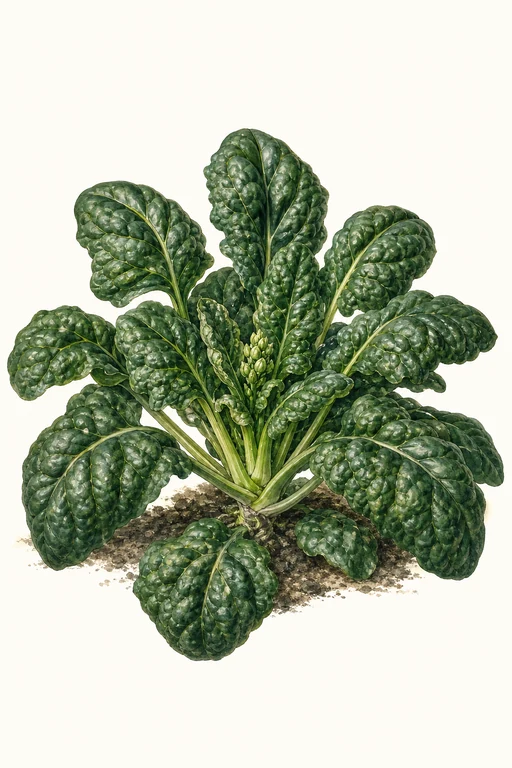
Sink your spoon into Monstrueux De Viroflay and savor its lush, deeply green leaves—tender yet substantial, with a velvety, almost buttery bite.
At maturity in about 37 days, it forms an abundant rosette of broad, crinkled foliage that holds its character beautifully whether you serve it fresh or warm. A standout for hearty sautés, creamy sauces, and quick braises, this is the spinach that turns everyday greens into a garden highlight.
Light: Part SunMaturity: 37 DaysHabit: Rosette
Crop Dates : 8a
| Milestone | Date |
|---|---|
| Start Indoors | Direct Sow |
| Last Frost | Apr 1st |
| Transplant / Sow Outdoors | Mar 25th |
| Harvest Begins | May 1st |
| Harvest Ends | Nov 5th |
Crop Details
| Trait | Value |
|---|---|
| Days to Maturity | 37 |
| Sun Requirements | Part Sun |
| Growth Habit | Rosette |
| Support Needed | None |
| Planting Depth | Normal |
| Germination Temp (°F) | 70 |
| Min Soil Temp (°F) | 40 |
| Min Night Temp (°F) | 28 |
| Harden Off (days) | 6 |
Culinary Notes

Chef's Note
Monstrueux de Viroflay cooks down into lush, velvety greens that stay substantial—no stringy grit, no watery dump—so it behaves beautifully in butter-driven sautés and creamy, spoonable sauces. Use it hot and immediate; its tender-yet-meaty leaves make warm applications feel luxurious.

Best Uses
- hot sauté with garlic and butter, letting it collapse into glossy ribbons
- creamy sauces where the leaves thicken without getting watery
- quick braises (steam-to-tender) to preserve a silky texture
- folding into omelets or lasagna for a hearty green layer

Flavor Profile

Kitchen Pairings
Frequently Asked Questions
What pest or disease most often affects Spinacia oleracea (spinach) and how can I stop it?
How often should I water Spinacia oleracea during the main growing phase?
How do I tell when to harvest Spinacia oleracea?
Sowing Tips

Transplant Conditions
Wait until soil reaches 40°F and nights stay above 28°F before moving outdoors. Harden off for 6 days first.
Expert Note

For extra tender, extra-large leaves, keep spinach consistently moist and harvest frequently as soon as plants reach full size.