
Moon And Stars
Sink your spoon into Moon And Stars’ radiant sweetness: a picnic watermelon with a luminous, field-ready presence and a flavor that feels sun-warmed from first bite.
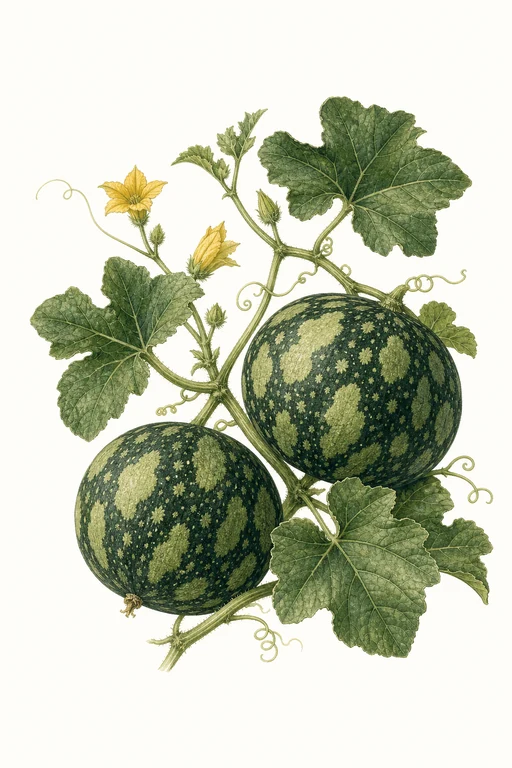
The flesh is crisp and juicy with a clean, balanced snap, while the rind wears its signature constellation—dark green “moon” blotches and starry specks over a deep, velvety background. Ideal for sharing straight from the garden, this variety shines as a showpiece for fresh slices and vibrant fruit platters.
Light: Full SunMaturity: 85 DaysHabit: Vine
Planting schedules and alerts are optimized for Columbus (Zone 6b).
Crop Dates
| Milestone | Date |
|---|---|
| Start Indoors | Apr 25th |
| Last Frost | Apr 25th |
| Transplant / Sow Outdoors | May 9th |
| Harvest Begins | Aug 2nd |
| Harvest Ends | Oct 16th |
Crop Details
| Trait | Value |
|---|---|
| Days to Maturity | 85 |
| Sun Requirements | Full Sun |
| Growth Habit | Vine |
| Support Needed | Trellis |
| Planting Depth | Normal |
| Germination Temp (°F) | 75 |
| Min Soil Temp (°F) | 65 |
| Min Night Temp (°F) | 55 |
| Harden Off (days) | 12 |
Culinary Notes

Chef's Note
Moon And Stars is built for spoon-first eating: tight, crisp juice and a balanced sweetness that doesn’t turn watery when it hits the cold. Treat it like a showpiece—salt, lime, and fresh herbs wake the aromatics without flattening the snap.

Best Uses
- cold fruit platters and “slice-and-share” wedges
- icebox-style watermelon with a quick salt-lime wake-up
- blended slushes and granita (keeps a crisp bite)
- quick pickles for rind—tart, crunchy counterpoint

Flavor Profile

Frequently Asked Questions
What’s the most common pest or disease problem for Citrullus lanatus (watermelon), and how do I fix it?
How often should I water Citrullus lanatus during the main growing phase?
How can I tell when Citrullus lanatus ‘moon and stars’ watermelons are ready to harvest?
Sowing Tips

Transplant Conditions
Wait until soil reaches 65°F and nights stay above 55°F before moving outdoors. Harden off for 12 days first.

Direct Sow Preferred
Sensitive roots — does not transplant well. If starting indoors, use biodegradable pots and disturb roots as little as possible when moving outdoors.
Expert Note

Warm the soil with black plastic (or row cover early) before transplanting, then water deeply but avoid wetting foliage to reduce disease.