
Mottistone
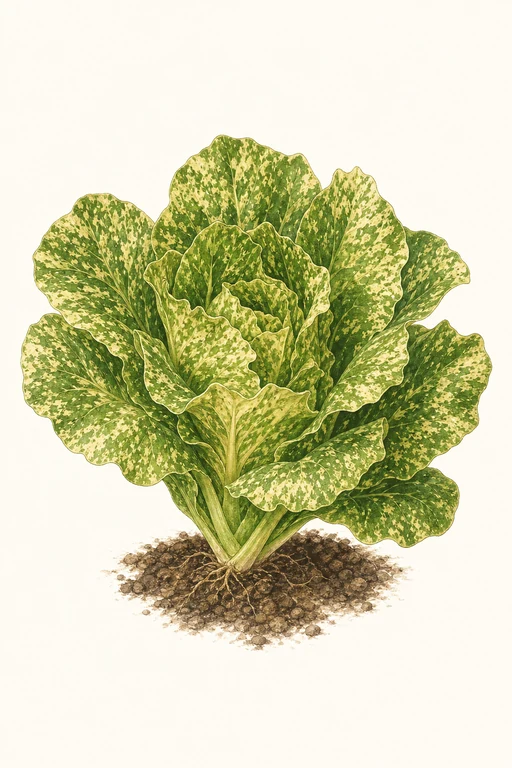
Unfurl Mottistone and savor its unmistakable, garden-bright charm: crisp, broad leaves with a mottled, buttery-green base brushed in soft, creamy highlights.
The texture is satisfyingly crunchy and tender at once, holding a fresh bite that shines in salads and as a vivid bed for garnishes. With its Batavian breadth and steady, 55-day pace to maturity, Mottistone rewards home gardeners with a generous harvest and an elegant, showy look in the row.
Light: Part SunMaturity: 55 DaysHabit: Rosette
Location not set yet
Location not set yet
Enter your ZIP for local crop dates
Mottistone Planting Dates by USDA Zone
Estimated US hardiness-zone windows for sow, transplant, and harvest. Enter a US ZIP above for exact local dates, or open a zone below.
| Zone | Start Indoors | Sow / Transplant | Harvest |
|---|---|---|---|
| Zone 1a | Protected Environment Only | ||
| Zone 1b | May 4th | Jun 1st | Jul 26th – Aug 1st |
| Zone 2a | Apr 27th | May 25th | Jul 19th – Aug 29th |
| Zone 2b | Apr 17th | May 15th | Jul 9th – Aug 25th |
| Zone 3a | Apr 17th | May 15th | Jul 9th – Sep 1st |
| Zone 3b | Apr 21st | May 19th | Jul 13th – Sep 21st |
| Zone 4a | Apr 17th | May 15th | Jul 9th – Sep 24th |
| Zone 4b | Apr 15th | May 13th | Jul 7th – Sep 27th |
| Zone 5a | Apr 10th | May 8th | Jul 2nd – Sep 30th |
| Zone 5b | Apr 6th | May 4th | Jun 28th – Oct 5th |
| Zone 6a | Apr 3rd | May 1st | Jun 25th – Oct 10th |
| Zone 6b | Mar 28th | Apr 25th | Jun 19th – Oct 16th |
| Zone 7a | Mar 23rd | Apr 20th | Jun 14th – Oct 20th |
| Zone 7b | Mar 13th | Apr 10th | Jun 4th – Oct 28th |
| Zone 8a | Mar 4th | Apr 1st | May 26th – Nov 5th |
| Zone 8b | Feb 23rd | Mar 23rd | May 17th – Nov 12th |
| Zone 9a | Feb 6th | Mar 6th | Apr 30th – Nov 26th |
| Zone 9b | Jan 12th | Feb 9th | Apr 5th – Dec 9th |
| Zone 10a | — | Oct 1st | Nov 25th – Feb 28th |
| Zone 10b | — | Oct 1st | Nov 25th – Feb 28th |
| Zone 11a | — | Oct 1st | Nov 25th – Feb 28th |
| Zone 11b | — | Oct 1st | Nov 25th – Feb 28th |
| Zone 12a | — | Oct 1st | Nov 25th – Feb 28th |
| Zone 12b | — | Oct 1st | Nov 25th – Feb 28th |
| Zone 13a | — | Oct 1st | Nov 25th – Feb 28th |
| Zone 13b | — | Oct 1st | Nov 25th – Feb 28th |
Crop Details
| Trait | Value |
|---|---|
| Days to Maturity | 55 |
| Sun Requirements | Part Sun |
| Growth Habit | Rosette |
| Support Needed | None |
| Planting Depth | Surface |
| Germination Temp (°F) | 70 |
| Min Soil Temp (°F) | 45 |
| Min Night Temp (°F) | 35 |
| Harden Off (days) | 6 |
Culinary Notes

Chef's Note
Mottistone’s broad Batavian leaves give you that rare combo of crisp bite and supple tenderness—dressing clings without turning greasy or wilting fast. It’s sweet-buttery with a controlled edge, so it shines with bright acid and salty fat, especially when you want texture to stay audible.

Best Uses
- big-bowl salad greens where you want crunch that doesn’t collapse
- simple dressed leaves for late-summer meals—olive oil, lemon, flaky salt
- a sturdy lettuce bed for grilled proteins and runny sauces
- quick char-and-eat skillet tosses to tame bitterness without going soggy

Flavor Profile

Kitchen Pairings
Frequently Asked Questions
What’s a common pest or disease problem for Lactuca sativa (leaf/batavian-type lettuce), and how do I control it?
During the main growing phase, how often should I water Lactuca sativa so it stays crisp and doesn’t go bitter?
How can I tell when mottistone lettuce (Lactuca sativa) is ready to harvest?
Sowing Tips

Transplant Conditions
Wait until soil reaches 45°F and nights stay above 35°F before moving outdoors. Harden off for 6 days first.
Expert Note

For best flavor, keep soil consistently moist and transplant once cool weather is settling in, then use light shade if days get hot to reduce bitterness and tipburn risk.