
Muncheong
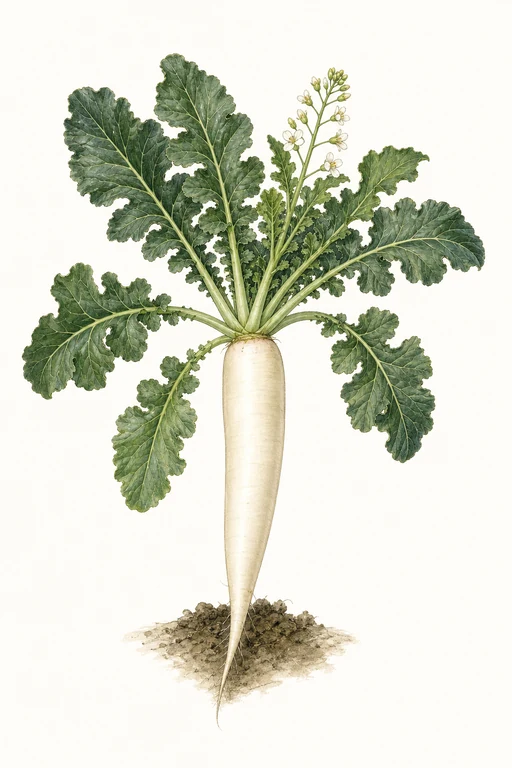
Silky and luminous at harvest, Muncheong daikon forms long, tapered roots with a clean, ivory-white glow and a pleasantly crisp snap.
Its flavor is bright and gently peppery—never harsh—making it especially satisfying fresh, while its tender, juicy texture shines in quick pickles and savory sauces. Grow Muncheong for a steady, 60-day rhythm of dependable roots that look as good as they taste in the garden bed.
Light: Full SunMaturity: 60 DaysHabit: Taproot
Planting schedules and alerts are optimized for Columbus (Zone 6b).
Crop Dates
| Milestone | Date |
|---|---|
| Start Indoors | Direct Sow |
| Last Frost | Apr 25th |
| Transplant / Sow Outdoors | Apr 25th |
| Harvest Begins | Jun 24th |
| Harvest Ends | Oct 16th |
Crop Details
| Trait | Value |
|---|---|
| Days to Maturity | 60 |
| Sun Requirements | Full Sun |
| Growth Habit | Taproot |
| Support Needed | None |
| Planting Depth | Normal |
| Germination Temp (°F) | 55 |
| Min Soil Temp (°F) | 45 |
| Min Night Temp (°F) | 28 |
| Harden Off (days) | Not Required |
Culinary Notes

Chef's Note
Muncheong daikon hits that rare sweet spot: a peppery lift that stays polite, plus a juicy crispness that holds up in quick brines. It’s the kind of daikon you can shave paper-thin without it tasting aggressively spicy, then turn around and cook it for a crisp-tender bite.

Best Uses
- paper-thin raw slices in lettuce-free crunch salads
- quick pickles where it stays snappy and luminous
- stir-fries or brief sautés for crisp-tender texture
- grated daikon in savory sauces and dipping condiments

Flavor Profile

Kitchen Pairings
Frequently Asked Questions
What pest or disease is most common on Raphanus sativus (radish) and how do I treat it at home?
How often should I water Raphanus sativus during the main growing phase?
How can I tell when Raphanus sativus is ready to harvest?
Sowing Tips

Transplant Conditions
Wait until soil reaches 45°F and nights stay above 28°F before moving outdoors.
Expert Note

For the mild, crisp root, keep soil consistently moist and avoid hot, long-day conditions that can push radishes toward bitterness or bolting.