
Nadia
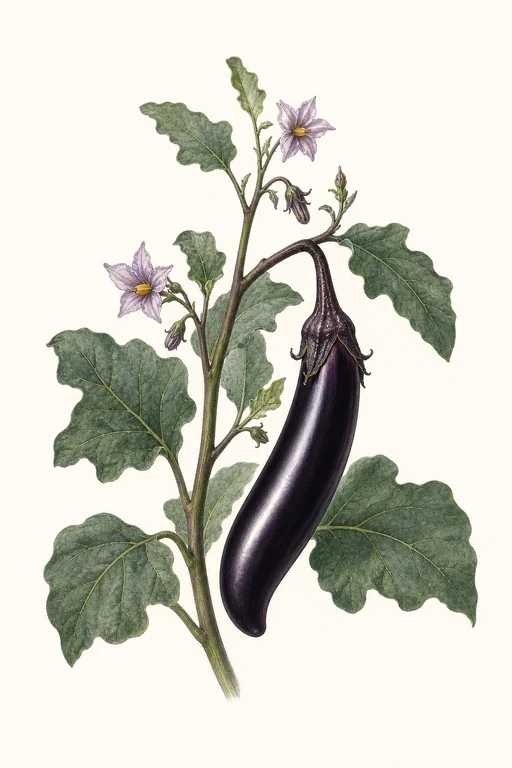
Silken and luminous, Nadia Japanese eggplant ripens to a glossy, inky purple that catches the light like polished lacquer.
Its flesh is tender and pleasantly mild, with a fine, creamy texture that stays smooth as the fruit matures—ideal for roasting until satiny, for fresh slicing, and for bold sauces that cling beautifully to its slender shape. Grow Nadia for a steady harvest of elegant, market-ready fruits with a refined, garden-to-table appeal.
Light: Full SunMaturity: 75 DaysHabit: Upright
Planting schedules and alerts are optimized for Columbus (Zone 6b).
Crop Dates
| Milestone | Date |
|---|---|
| Start Indoors | Feb 28th |
| Last Frost | Apr 25th |
| Transplant / Sow Outdoors | Jun 20th |
| Harvest Begins | Sep 3rd |
| Harvest Ends | Oct 16th |
Crop Details
| Trait | Value |
|---|---|
| Days to Maturity | 75 |
| Sun Requirements | Full Sun |
| Growth Habit | Upright |
| Support Needed | Stake |
| Planting Depth | Normal |
| Germination Temp (°F) | 80 |
| Min Soil Temp (°F) | 60 |
| Min Night Temp (°F) | 50 |
| Harden Off (days) | 10 |
Culinary Notes

Chef's Note
Nadia’s slender fruit cooks up creamy and smooth without getting chewy, so it rewards fast, hot methods—broil, roast, or grill until the edges bronzed and the inside goes satin. Its mildness is a blank canvas for salty-savory glazes and sauces that stick like lacquer to every slice.

Best Uses
- high-heat roasting for a satiny, lacquered texture
- quick-grill or broil slices that caramelize at the edges
- bold, clingy sauces (like miso-tahini or tomato) that coat without falling apart
- thin fresh slicing with salt to tame the bite and keep it supple

Flavor Profile

Kitchen Pairings
Frequently Asked Questions
What’s the most common disease issue for Solanum melongena (eggplant) and how do I stop it?
How often should I water eggplant during the main growing phase (around the first fruit set through maturity)?
How can I tell when Solanum melongena is ready to harvest (75 days to maturity)?
Sowing Tips

Transplant Conditions
Wait until soil reaches 60°F and nights stay above 50°F before moving outdoors. Harden off for 10 days first.
Expert Note

Warm soil is critical—wait until nights are reliably warm and the soil is about 60°F+ before transplanting for best survival and early production.