
Nero Di Toscana
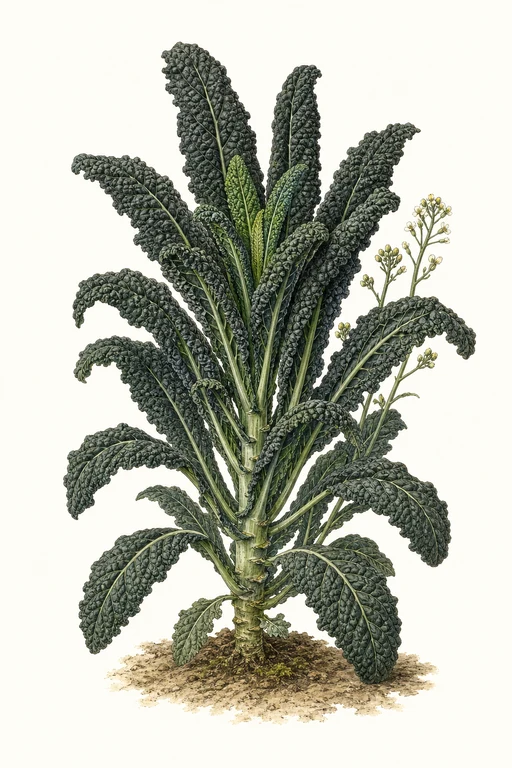
Velvety leaves unfurl in a deep, inky green that looks almost lacquered, with a tender bite that sweetens as the weather cools.
Nero Di Toscana forms upright, tightly ruffled rosettes whose texture stays pleasantly crisp—ideal for steaming, sautéing, and hearty soups, or for tossing into robust salads when young. Grow it for a dramatic, long-season harvest that turns the garden into a living palette of dark greens.
Light: Full SunMaturity: 55 DaysHabit: Upright
Planting schedules and alerts are optimized for Columbus (Zone 6b).
Crop Dates
| Milestone | Date |
|---|---|
| Start Indoors | Mar 28th |
| Last Frost | Apr 25th |
| Transplant / Sow Outdoors | Apr 25th |
| Harvest Begins | Jun 19th |
| Harvest Ends | Oct 16th |
Crop Details
| Trait | Value |
|---|---|
| Days to Maturity | 55 |
| Sun Requirements | Full Sun |
| Growth Habit | Upright |
| Support Needed | None |
| Planting Depth | Normal |
| Germination Temp (°F) | 40 |
| Min Soil Temp (°F) | 40 |
| Min Night Temp (°F) | 32 |
| Harden Off (days) | 6 |
Culinary Notes

Chef's Note
Nero di Toscana’s ruffled, velvety leaves stay crisp in the pan, then sweeten as the weather cools—so you can cook it without turning it dull or sulfurous. Use salty, fatty partners (parmesan, anchovy, smoked pork) to round the bitterness, and finish with lemon for lift.

Best Uses
- quick sauté with olive oil until just tender for a glossed, leaf-wrapped bite
- steam then toss with lemon and a salty fat for a clean, not-muddy side
- treat like a finishing green in soups/stews—so it stays upright and doesn’t collapse
- young leaves in sturdy salads where the ruffles hold dressing

Flavor Profile

Kitchen Pairings
Frequently Asked Questions
What pest or disease most commonly affects Brassica oleracea var. viridis (Nero Di Toscana) and how can I control it at home?
How often should I water Nero Di Toscana during the main growing phase, and what soil moisture level should I maintain?
How do I know when Nero Di Toscana is ready to harvest?
Sowing Tips

Transplant Conditions
Wait until soil reaches 40°F and nights stay above 32°F before moving outdoors. Harden off for 6 days first.
Expert Note

For best leaf flavor, keep plants growing through cool weather and harvest regularly from the lower leaves to encourage new growth.