
Noordhollandse Bloedrode
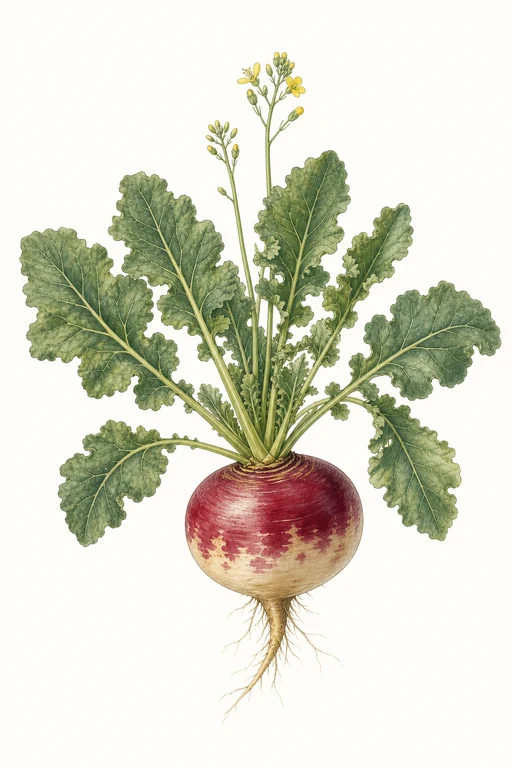
A velvet-deep, blood-red shoulder blushes above the soil, then fades to a clean, pale interior that feels tender and sweet when you lift it from the ground.
Noordhollandse Bloedrode forms a compact, globe-to-flattened turnip with crisp, fine-grained texture—ideal for roasting until caramel-soft, or for fresh slicing when you want a bright, peppery snap. Grow it for the striking color that steals the show in the garden and delivers a richly flavored table turnip at about 55 days.
Light: Full SunMaturity: 55 DaysHabit: Taproot
Planting schedules and alerts are optimized for Columbus (Zone 6b).
Crop Dates
| Milestone | Date |
|---|---|
| Start Indoors | Direct Sow |
| Last Frost | Apr 25th |
| Transplant / Sow Outdoors | Apr 25th |
| Harvest Begins | Jun 19th |
| Harvest Ends | Oct 16th |
Crop Details
| Trait | Value |
|---|---|
| Days to Maturity | 55 |
| Sun Requirements | Full Sun |
| Growth Habit | Taproot |
| Support Needed | None |
| Planting Depth | Normal |
| Germination Temp (°F) | 45 |
| Min Soil Temp (°F) | 40 |
| Min Night Temp (°F) | 28 |
| Harden Off (days) | Not Required |
Culinary Notes

Chef's Note
This blood-red table turnip gives you a crisp, peppery jolt on the raw bite, but it turns plush and sweet when you roast it—caramel soft at the edges, still holding shape. The fine grain means less fibrous chewing than many bulk turnips, so it’s great for both fast slicing and hot-pan browning.

Best Uses
- roast wedges until caramel-soft with a velvety edge
- quick-pickled slices for a crunchy, vinegar snap
- thin raw rounds on buttered bread to keep the peppery snap
- braise in stock until just tender, then finish with acidity

Flavor Profile

Kitchen Pairings
Frequently Asked Questions
What pest or disease commonly affects Brassica rapa (noordhollandse bloedrode turnip), and how can I control it?
How often should I water Brassica rapa during the main growing phase to get good roots?
How do I know when Noordhollandse Bloedrode turnips are ready to harvest?
Sowing Tips

Transplant Conditions
Wait until soil reaches 40°F and nights stay above 28°F before moving outdoors.
Expert Note

For the best crunchy texture and color, keep soil consistently moist and harvest before the roots get too large or woody.