
Nootka Rose
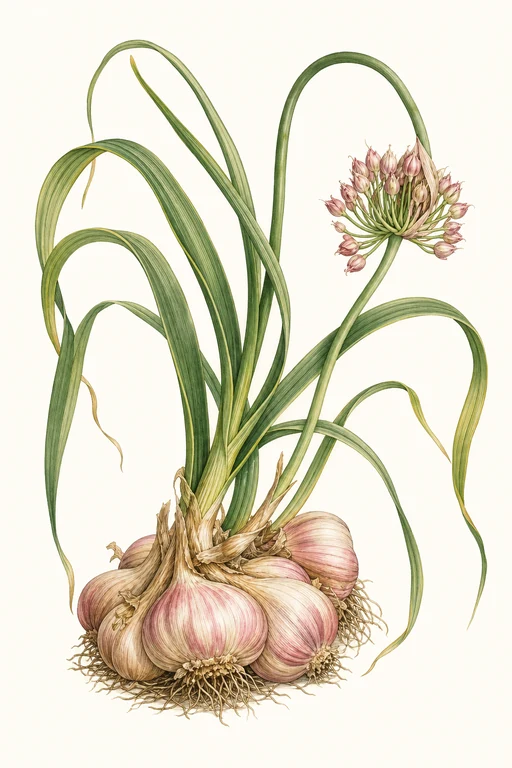
Fragrant and richly pungent, Nootka Rose softneck garlic forms handsome bulbs wrapped in rosy-tinged skins that glow like antique satin in the garden light.
Expect a creamy, medium-to-large clove structure with a smooth, easy-to-separate texture—ideal for building bold flavor in everyday preparations. Nootka Rose’s dependable, long-season growth (about 210 days) rewards home gardeners with storage-ready bulbs that keep their character far beyond harvest, making it a favorite for roasting, sauces, and pickling.
Light: Full SunMaturity: 210 DaysHabit: Bulbing
Crop Dates : 12a
| Milestone | Date |
|---|---|
| Start Indoors | — |
| Climate | Frost-Free Climate |
| Transplant / Sow Outdoors | Oct 1st |
| Harvest Begins | Feb 28th |
| Harvest Ends | Feb 28th |
Crop Details
| Trait | Value |
|---|---|
| Days to Maturity | 210 |
| Sun Requirements | Full Sun |
| Growth Habit | Bulbing |
| Support Needed | None |
| Planting Depth | Normal |
| Germination Temp (°F) | 50 |
| Min Soil Temp (°F) | 40 |
| Min Night Temp (°F) | 28 |
| Harden Off (days) | Not Required |
Culinary Notes

Chef's Note
Nootka Rose garlic is all about that fragrant, punchy bite that quickly turns silky when heat is applied—cloves separate cleanly, so you can go from knife to pan without fuss. Roast it and it spreads like sweet cream; mince/grate it and it builds an aromatic backbone without any gritty edge.

Best Uses
- slow-roasted whole bulbs for caramel-soft, spreadable cloves
- hot sauté base for stocks, beans, and braises where you want garlic to dissolve cleanly
- quick-pickled garlic in vinegar brine for crisp, spicy-tang bites
- grating into sauces and dressings where it stays smooth instead of shredding up

Flavor Profile

Kitchen Pairings
Frequently Asked Questions
What pest or disease commonly affects Allium sativum (Nootka rose) and what should I do?
How often should I water Allium sativum during the main growing phase?
How can I tell when Allium sativum is ready to harvest?
Sowing Tips

Transplant Conditions
Wait until soil reaches 40°F and nights stay above 28°F before moving outdoors.
Expert Note

Plant garlic in fall so it can establish roots and vernalize; mulch heavily for winter protection and harvest when lower leaves brown but tops still hold some green.