
Northern White
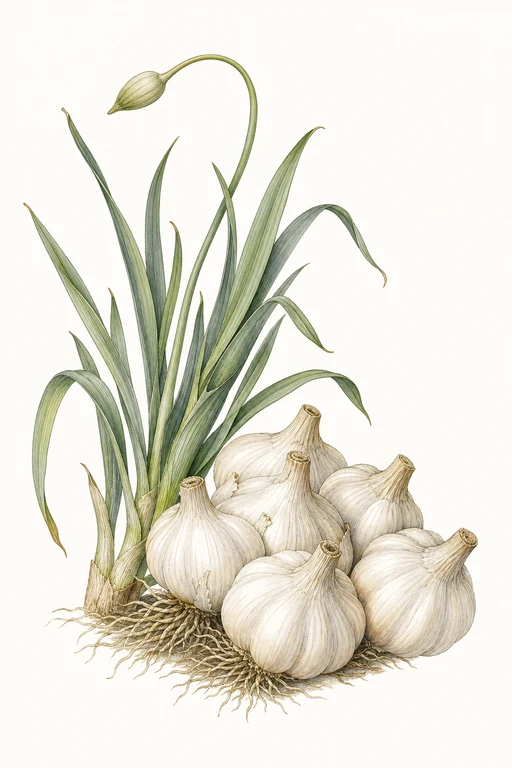
Northern White hardneck garlic unfurls with a clean, luminous presence—bulbs clothed in pale, parchment-white skins that feel crisp and substantial in the hand.
Expect bold, aromatic flavor with a bright snap and a lingering savory depth, plus cloves that roast to a silky, spreadable tenderness. A standout for home growers seeking dependable cool-season performance and a reliable harvest at about 210 days, Northern White shines in sauces, infused oils, and pickling for a distinctly fragrant finish.
Light: Full SunMaturity: 210 DaysHabit: Bulbing
Crop Dates : 2a
| Milestone | Date |
|---|---|
| Last Frost | May 25th |
| Growing Approach | Protected Environment Only |
Crop Details
| Trait | Value |
|---|---|
| Days to Maturity | 210 |
| Sun Requirements | Full Sun |
| Growth Habit | Bulbing |
| Support Needed | None |
| Planting Depth | Normal |
| Germination Temp (°F) | 50 |
| Min Soil Temp (°F) | 40 |
| Min Night Temp (°F) | 28 |
| Harden Off (days) | Not Required |
Culinary Notes

Chef's Note
Northern White’s hardneck punch hits fast, then mellows into a luminous, roast-silky sweetness—so it plays equally well when you want garlic to be the loudest ingredient or the background hum. It’s especially good for infusing oil or turning whole cloves into a spread that doesn’t taste harsh or soapy.

Best Uses
- slow-roasted cloves for a sweet, buttery spread
- quick sauté or paste in pan sauces where the bite stays assertive
- garlic-infused oil for finishing soups and beans
- quick-pickled cloves for sharp, crunchy snacking and sandwiches

Flavor Profile

Kitchen Pairings
Frequently Asked Questions
How do I prevent and treat white rot in Allium sativum (garlic)?
How often should I water Allium sativum during the main growing season, and what soil moisture level should I aim for?
How can I tell when Northern White garlic (Allium sativum) is ready to harvest?
Sowing Tips

Transplant Conditions
Wait until soil reaches 40°F and nights stay above 28°F before moving outdoors.
Expert Note

Plant garlic cloves in fall so they root and overwinter, then send up strong growth in spring for best bulb size and storage quality.