
Nutterbutter
Sink your spoon into Nutterbutter’s velvety, honeyed flesh—sweet, nutty, and richly aromatic with a smooth, creamy texture that feels almost satin-silken.
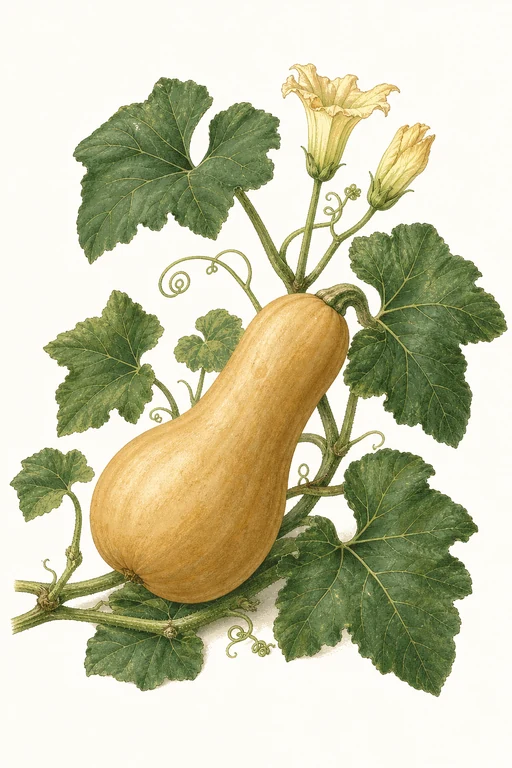
The classic butternut silhouette ripens to a warm, tan-gold body with a slender, upright neck, making it a standout in the garden and a dependable centerpiece for hearty seasonal favorites. Grow Nutterbutter for roasting and purees, and for silky sauces and comforting baked preparations where its signature butternut flavor truly shines.
Light: Full SunMaturity: 80 DaysHabit: Vine
Planting schedules and alerts are optimized for Columbus (Zone 6b).
Crop Dates
| Milestone | Date |
|---|---|
| Start Indoors | Apr 11th |
| Last Frost | Apr 25th |
| Transplant / Sow Outdoors | Apr 25th |
| Harvest Begins | Jul 14th |
| Harvest Ends | Oct 16th |
Crop Details
| Trait | Value |
|---|---|
| Days to Maturity | 80 |
| Sun Requirements | Full Sun |
| Growth Habit | Vine |
| Support Needed | Trellis |
| Planting Depth | Normal |
| Germination Temp (°F) | 70 |
| Min Soil Temp (°F) | 65 |
| Min Night Temp (°F) | 55 |
| Harden Off (days) | 10 |
Culinary Notes

Chef's Note
Nutterbutter’s satin-smooth flesh leans sweet and aromatic, so it rewards high-heat roasting and careful blending—no chunky handling needed. Finish with browned butter and a bright pinch of spice to sharpen the honeyed notes instead of dulling them.

Best Uses
- roasted wedges that caramelize at the edges for spoonable caramel-squash flavor
- silky puree for base sauces and pasta coats
- creamy soup (blended smooth, finished with fat and acid)
- baked gratins or custardy casseroles where it sets into tender slices

Flavor Profile

Frequently Asked Questions
What pest or disease is most likely to hit Cucurbita moschata (Nutterbutter) and how can I stop it early?
How often should I water Nutterbutter (Cucurbita moschata) during the main growing phase?
How do I tell when Nutterbutter (Cucurbita moschata) is ready to harvest?
Sowing Tips

Transplant Conditions
Wait until soil reaches 65°F and nights stay above 55°F before moving outdoors. Harden off for 10 days first.

Direct Sow Preferred
Sensitive roots — does not transplant well. If starting indoors, use biodegradable pots and disturb roots as little as possible when moving outdoors.
Expert Note

For fastest success, pre-warm the soil with black plastic and keep transplants well-watered for 7–10 days to reduce transplant shock.