
Orange Blaze
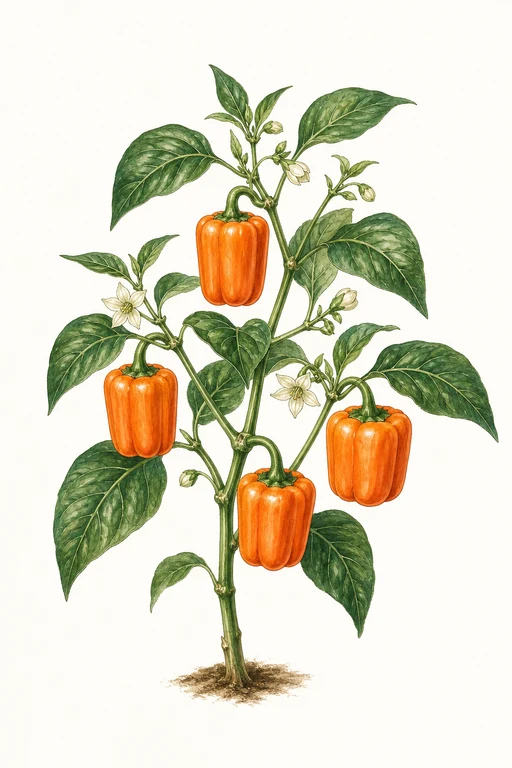
Sunlit and aromatic, Orange Blaze bell peppers ripen to a vivid, warm orange glow with a crisp, thick-walled crunch.
Their glossy skin holds a clean, sweet flavor with a gentle, fragrant lift—ideal for fresh snacking, vibrant roasting, and showy color in sautés, sauces, and quick pickles. Grow for a steady harvest rhythm around 65 days, when each fruit’s sturdy shape and bright finish makes the garden look as good as it tastes.
Light: Full SunMaturity: 65 DaysHabit: Bush
Planting schedules and alerts are optimized for Columbus (Zone 6b).
Crop Dates
| Milestone | Date |
|---|---|
| Start Indoors | Mar 7th |
| Last Frost | Apr 25th |
| Transplant / Sow Outdoors | Jun 20th |
| Harvest Begins | Aug 24th |
| Harvest Ends | Oct 16th |
Crop Details
| Trait | Value |
|---|---|
| Days to Maturity | 65 |
| Sun Requirements | Full Sun |
| Growth Habit | Bush |
| Support Needed | Stake |
| Planting Depth | Normal |
| Germination Temp (°F) | 80 |
| Min Soil Temp (°F) | 60 |
| Min Night Temp (°F) | 50 |
| Harden Off (days) | 10 |
Culinary Notes

Chef's Note
Orange Blaze bell peppers hit with a sweet, aromatic crunch—thick-walled enough to stay structured in heat and still feel snappy in salads. They roast beautifully: blister, char lightly, then scrape the caramelized edges into anything oily and bright like olive oil with lime.

Best Uses
- raw matchsticks for crunch under vinaigrette (won’t go limp fast)
- hot roasting until blistered for smoky-sweet edges
- quick sautéing where the walls stay toothsome
- fast brining/quick pickles to keep that snap and color

Flavor Profile

Kitchen Pairings
Frequently Asked Questions
What pest or disease problem commonly affects Capsicum annuum (Giant California Wonder type) and how can I manage it?
How often should I water Capsicum annuum during the main growing phase?
How do I tell when my Capsicum annuum peppers are ready to harvest?
Sowing Tips

Transplant Conditions
Wait until soil reaches 60°F and nights stay above 50°F before moving outdoors. Harden off for 10 days first.
Expert Note

For best early performance, start pepper seedlets at a stable warm temperature and transplant only when nights are consistently warm and soil has reached ~60°F to avoid cold-stress delays.