
Oriole Orange
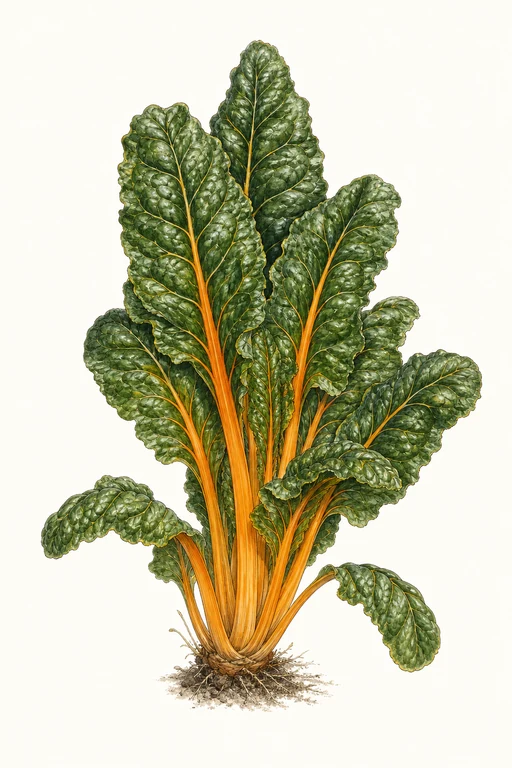
Sunlit Oriole Orange Swiss chard brings a vivid, sunset glow to the garden—tender leaves with a clean, sweet-green flavor and crisp, juicy ribs.
At about 55 days, the plants form upright, fountain-like clumps of glossy foliage that stays pleasantly succulent for fresh use and quick roasting-style caramelization, as well as vibrant sauces and pickling brines.
Light: Full SunMaturity: 55 DaysHabit: Rosette
Planting schedules and alerts are optimized for Columbus (Zone 6b).
Crop Dates
| Milestone | Date |
|---|---|
| Start Indoors | Apr 4th |
| Last Frost | Apr 25th |
| Transplant / Sow Outdoors | Apr 25th |
| Harvest Begins | Jun 19th |
| Harvest Ends | Oct 16th |
Crop Details
| Trait | Value |
|---|---|
| Days to Maturity | 55 |
| Sun Requirements | Full Sun |
| Growth Habit | Rosette |
| Support Needed | None |
| Planting Depth | Normal |
| Germination Temp (°F) | 85 |
| Min Soil Temp (°F) | 40 |
| Min Night Temp (°F) | 35 |
| Harden Off (days) | 6 |
Culinary Notes

Chef's Note
Oriole Orange Swiss chard gives you that rare combo: sweet, succulent leaf with ribs that stay snappy instead of going stewy. It caramelizes fast at higher heat and takes a citrus-and-fat finish beautifully, so it won’t taste muddy even when you’re cooking it down for sauce.

Best Uses
- warm sauté with a fast lemon-butter gloss
- roast-style caramelization—high heat to tame bitterness and bronze the ribs
- blended chard sauces for pasta (quick reduction, silkier than greens-yogurt)
- quick pickling brines for bright, crunchy ribs

Flavor Profile

Kitchen Pairings
Frequently Asked Questions
What pest or disease most often affects Swiss chard (Beta vulgaris var. cicla), and how do I treat it?
How often should I water Swiss chard during its main growth (to around day 55)?
How can I tell when Swiss chard is ready to harvest?
Sowing Tips

Transplant Conditions
Wait until soil reaches 40°F and nights stay above 35°F before moving outdoors. Harden off for 6 days first.
Expert Note

For best flavor, grow Swiss chard in cool weather and keep soil evenly moist to prevent bitterness.