
Ormskirk Savoy
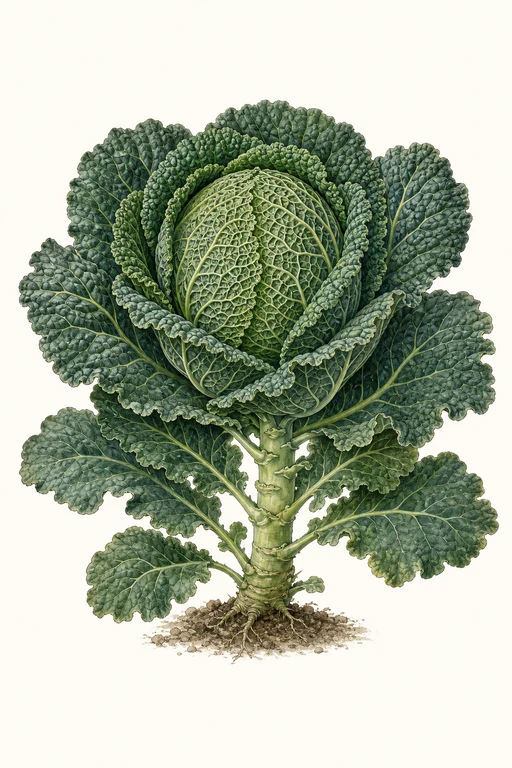
Feel the slow, satisfying crunch of Ormskirk Savoy as its tight head forms—deeply quilted leaves with a cool, sea-green sheen that seems to hold winter light.
With a mild, sweet cabbage flavor and a tender, finely savoyed texture, it’s ideal for long-season growing and steady harvest when temperatures turn crisp. Grow Ormskirk Savoy for hearty braises, comforting soups, and classic slaws that showcase its richly ruffled leaf surface.
Light: Full SunMaturity: 85 DaysHabit: Rosette
Location not set yet
Location not set yet
Enter your ZIP for local crop dates
Ormskirk Savoy Planting Dates by USDA Zone
Estimated US hardiness-zone windows for sow, transplant, and harvest. Enter a US ZIP above for exact local dates, or open a zone below.
| Zone | Start Indoors | Sow / Transplant | Harvest |
|---|---|---|---|
| Zone 1a | Protected Environment Only | ||
| Zone 1b | Protected Environment Only | ||
| Zone 2a | Apr 27th | May 18th | Aug 11th – Aug 29th |
| Zone 2b | Apr 17th | May 8th | Aug 1st – Aug 25th |
| Zone 3a | Apr 17th | May 8th | Aug 1st – Sep 1st |
| Zone 3b | Apr 21st | May 12th | Aug 5th – Sep 21st |
| Zone 4a | Apr 17th | May 8th | Aug 1st – Sep 24th |
| Zone 4b | Apr 15th | May 6th | Jul 30th – Sep 27th |
| Zone 5a | Apr 10th | May 1st | Jul 25th – Sep 30th |
| Zone 5b | Apr 6th | Apr 27th | Jul 21st – Oct 5th |
| Zone 6a | Apr 3rd | Apr 24th | Jul 18th – Oct 10th |
| Zone 6b | Mar 28th | Apr 18th | Jul 12th – Oct 16th |
| Zone 7a | Mar 23rd | Apr 13th | Jul 7th – Oct 20th |
| Zone 7b | Mar 13th | Apr 3rd | Jun 27th – Oct 28th |
| Zone 8a | Mar 4th | Mar 25th | Jun 18th – Nov 5th |
| Zone 8b | Feb 23rd | Mar 16th | Jun 9th – Nov 12th |
| Zone 9a | Feb 6th | Feb 27th | May 23rd – Nov 26th |
| Zone 9b | Jan 12th | Feb 2nd | Apr 28th – Dec 9th |
| Zone 10a | — | Oct 1st | Dec 25th – Feb 28th |
| Zone 10b | — | Oct 1st | Dec 25th – Feb 28th |
| Zone 11a | — | Oct 1st | Dec 25th – Feb 28th |
| Zone 11b | — | Oct 1st | Dec 25th – Feb 28th |
| Zone 12a | — | Oct 1st | Dec 25th – Feb 28th |
| Zone 12b | — | Oct 1st | Dec 25th – Feb 28th |
| Zone 13a | — | Oct 1st | Dec 25th – Feb 28th |
| Zone 13b | — | Oct 1st | Dec 25th – Feb 28th |
Crop Details
| Trait | Value |
|---|---|
| Days to Maturity | 85 |
| Sun Requirements | Full Sun |
| Growth Habit | Rosette |
| Support Needed | None |
| Planting Depth | Normal |
| Germination Temp (°F) | 45 |
| Min Soil Temp (°F) | 40 |
| Min Night Temp (°F) | 32 |
| Harden Off (days) | 6 |
Culinary Notes

Chef's Note
Ormskirk Savoy comes off sweet and gentle, with that tightly quilted texture that stays springy—so braises feel plush but not collapsed. Pair it with sharpness (mustard or vinegar) and fat (butter or bacon) to make the leaves taste round instead of flat.

Best Uses
- braised wedges that soften while keeping structure
- slow-simmered cabbage soups and broths
- shredded slaw for a crisp, ruffled bite
- pan-roasted cabbage steaks with a glossy finish

Flavor Profile

Kitchen Pairings
Frequently Asked Questions
What’s a common disease or pest problem for Brassica oleracea var. capitata (savoy cabbage), and how do I manage it?
How often should I water Ormskirk Savoy cabbage during the main growing phase?
How can I tell when Ormskirk Savoy cabbage is ready to harvest?
Sowing Tips

Transplant Conditions
Wait until soil reaches 40°F and nights stay above 32°F before moving outdoors. Harden off for 6 days first.
Expert Note

For winter heads, keep transplants cool and firm—avoid heat stress and water inconsistently to prevent loosened heads.