
Pale Purple
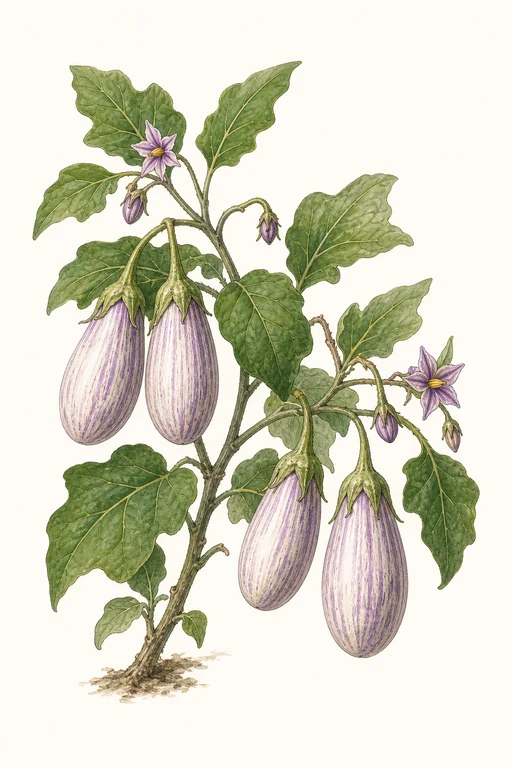
A hush of color at dusk—Pale Purple eggplant ripens with a soft, luminous skin banded in gentle lavender stripes over creamy pale ground.
Tender-fleshed and pleasantly mild, it offers a silky bite with fewer harsh notes than deeper-toned types, making it a favorite for roasting, grilling, and glossy pan sauces. Grow this striped beauty for 80-day harvests and enjoy its elegant, market-ready form from garden to platter.
Light: Full SunMaturity: 80 DaysHabit: Indeterminate
Planting schedules and alerts are optimized for Columbus (Zone 6b).
Crop Dates
| Milestone | Date |
|---|---|
| Start Indoors | Mar 7th |
| Last Frost | Apr 25th |
| Transplant / Sow Outdoors | Jun 20th |
| Harvest Begins | Sep 8th |
| Harvest Ends | Oct 16th |
Crop Details
| Trait | Value |
|---|---|
| Days to Maturity | 80 |
| Sun Requirements | Full Sun |
| Growth Habit | Indeterminate |
| Support Needed | Stake |
| Planting Depth | Normal |
| Germination Temp (°F) | 75 |
| Min Soil Temp (°F) | 60 |
| Min Night Temp (°F) | 50 |
| Harden Off (days) | 10 |
Culinary Notes

Chef's Note
With a paler, more tender flesh and fewer bitter sharp notes, this eggplant behaves like a creamy canvas—especially once it roasts and collapses. It’s built for high-heat cooking (grill/roast) where the surface gets savory and the inside turns silky, so you can keep sauces glossy and restrained rather than masking bitterness.

Best Uses
- roasted wedges tossed in olive oil until melting-soft
- grilled rounds for a spoonable, char-kissed topping base
- glossy skillet pan sauce where it collapses into a creamy coating
- braises/ratatouille-style cooks that benefit from low bitterness

Flavor Profile

Frequently Asked Questions
What pest or disease most commonly affects Solanum melongena (eggplant), and how can I prevent and treat it at home?
How often should I water Solanum melongena during the main growing phase (about the first 60 days after transplanting)?
How do I tell when my Solanum melongena (80 days to maturity) is ready to harvest?
Sowing Tips

Transplant Conditions
Wait until soil reaches 60°F and nights stay above 50°F before moving outdoors. Harden off for 10 days first.
Expert Note

For best results, transplant only when nights are reliably warm (keep soil ≥60°F) and avoid cold snaps with row cover for the first week.