
Palla Di Fuoco
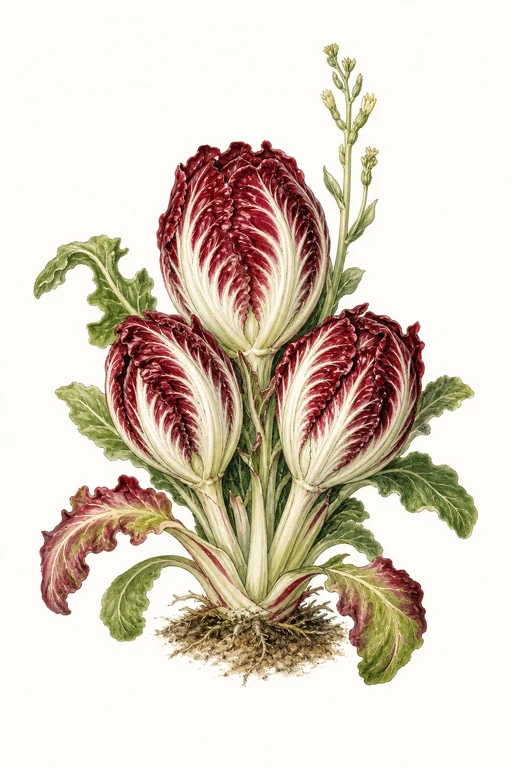
Fiery, ember-bright heads of Palla Di Fuoco bring a dramatic, ruby-edged crunch to the garden—each rosette tightens into a sculptural form with pale ribs and a deep, wine-red blush that seems to glow against the leaves.
The flavor is pleasantly bittersweet, with a crisp, succulent texture that holds its bite beautifully for fresh salads and bold braises, and it shines in roasted wedges, charred-leaf plates, and tangy sauces. Grow for a striking harvest window at about 68 days, when the heads are firm, vivid, and irresistibly crisp.
Light: Full SunMaturity: 68 DaysHabit: Rosette
Planting schedules and alerts are optimized for Columbus (Zone 6b).
Crop Dates
| Milestone | Date |
|---|---|
| Start Indoors | Direct Sow |
| Last Frost | Apr 25th |
| Transplant / Sow Outdoors | Apr 25th |
| Harvest Begins | Jul 2nd |
| Harvest Ends | Oct 16th |
Crop Details
| Trait | Value |
|---|---|
| Days to Maturity | 68 |
| Sun Requirements | Full Sun |
| Growth Habit | Rosette |
| Support Needed | None |
| Planting Depth | Normal |
| Germination Temp (°F) | 70 |
| Min Soil Temp (°F) | 40 |
| Min Night Temp (°F) | 32 |
| Harden Off (days) | Not Required |
Culinary Notes

Chef's Note
Palla Di Fuoco brings a firm, succulent crunch with a bittersweet, winey tang that doesn’t collapse under heat. It’s built for char and reduction—hit it with acid and salt-fat (olive oil, Parm, or anchovy) and the bitterness turns into a clean, ember-bright edge.

Best Uses
- charred-radicchio wedges that caramelize at the edges
- shredded raw salads dressed lightly so the leaves stay crisp
- braised radicchio in a tangy reduction (vinegar/wine) to mellow the bitterness
- roasted leaf plates for crisp-hot texture with a sharp sauce

Flavor Profile

Kitchen Pairings
Frequently Asked Questions
What pest or disease most commonly affects Cichorium intybus (Palla Di Fuoco) and how do I control it?
How often should I water Palla Di Fuoco during the main growing phase?
How can I tell when Palla Di Fuoco is ready to harvest?
Sowing Tips

Transplant Conditions
Wait until soil reaches 40°F and nights stay above 32°F before moving outdoors.
Expert Note

For best deep red color and less bitterness, grow radicchio in cool weather and keep soil consistently moist while avoiding heat spikes.