
Palla Rossa Mavrik
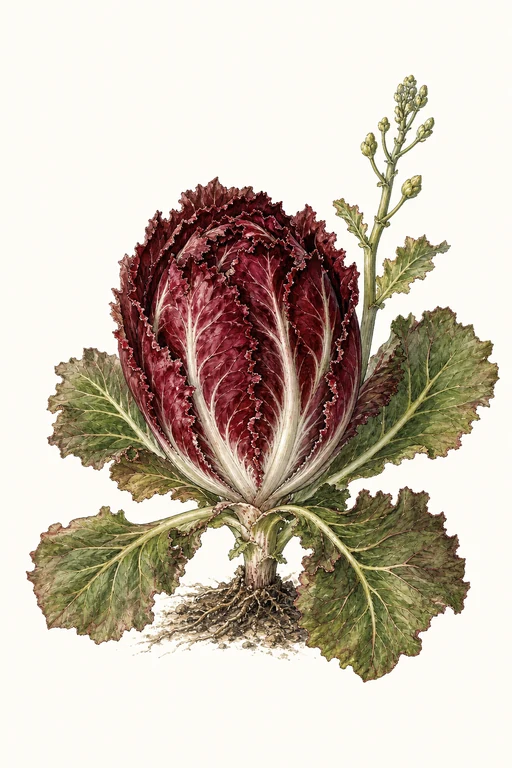
Crisp as a cool morning, Palla Rossa Mavrik forms tight, ruby-red heads with a luminous, slightly glossy sheen and a pleasantly bitter snap that lingers like fine espresso on the palate.
The leaves are broad and ruffled at the edges, layering into a compact silhouette that holds its texture through harvest, making it ideal for fresh salads where its bold color and crunch shine. Grow it for striking, deep-red rosettes that bring drama to the garden and a vivid, bittersweet character to every plate.
Light: Full SunMaturity: 60 DaysHabit: Rosette
Planting schedules and alerts are optimized for Columbus (Zone 6b).
Crop Dates
| Milestone | Date |
|---|---|
| Start Indoors | Direct Sow |
| Last Frost | Apr 25th |
| Transplant / Sow Outdoors | Apr 25th |
| Harvest Begins | Jun 24th |
| Harvest Ends | Oct 16th |
Crop Details
| Trait | Value |
|---|---|
| Days to Maturity | 60 |
| Sun Requirements | Full Sun |
| Growth Habit | Rosette |
| Support Needed | None |
| Planting Depth | Normal |
| Germination Temp (°F) | 70 |
| Min Soil Temp (°F) | 45 |
| Min Night Temp (°F) | 28 |
| Harden Off (days) | Not Required |
Culinary Notes

Chef's Note
This radicchio is built for bite—tight heads and broad, ruffled leaves hold their crunch long enough for a real salad, not a wilted apology. Use an assertive acid and a fatty partner (olive oil, cheese, cured meats) to round the espresso bitterness into something elegant rather than sharp.

Best Uses
- raw salad base with a light, oily vinaigrette so the crunch stays sharp
- charred or pan-grilled halves to soften bitterness and caramelize the edges
- tossed with warm beans or lentils where the heat tames the bite without making it limp
- shaved for quick tarts and sandwiches where it stays snappy

Flavor Profile

Kitchen Pairings
Frequently Asked Questions
What pest or disease commonly affects Cichorium intybus (Palla Rossa) and how do I control it?
How often should I water Cichorium intybus during the main growing phase (about weeks 3–8)?
How can I tell when Palla Rossa (Cichorium intybus) is ready to harvest at ~60 days?
Sowing Tips

Transplant Conditions
Wait until soil reaches 45°F and nights stay above 28°F before moving outdoors.
Expert Note

For the sweetest radicchio flavor, aim for cool weather and avoid letting heads bolt with heat—consistent soil moisture helps.