
Peach Bhut Jolokia
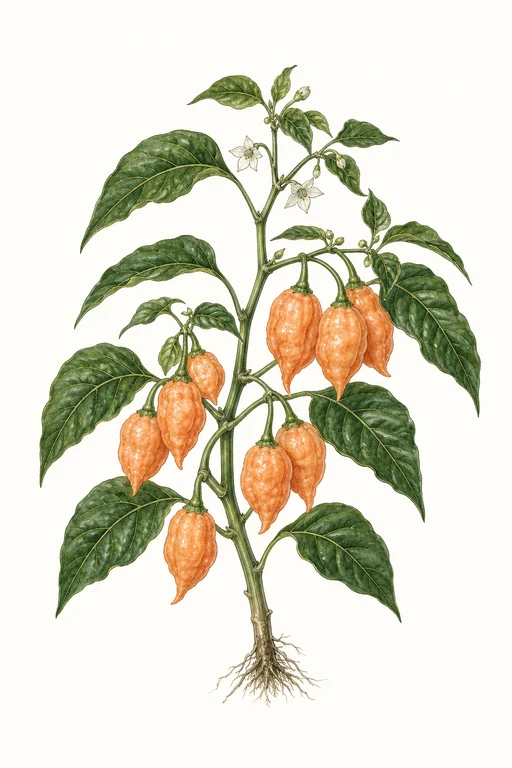
Sink your senses into Peach Bhut Jolokia’s luminous, peachy glow—fruits ripen from creamy apricot to a warm, sunset peach with a softly wrinkled, lantern-like charm.
Expect a firm, thick-walled texture that delivers a slow-building, superhot punch, prized for bold flavor intensity in sauces and fiery pickles, and for roasting to deepen its fruity heat. For the home gardener, this 95-day standout rewards patience with a pepper that looks as remarkable as it performs—an unmistakable statement plant for spice lovers.
Light: Full SunMaturity: 95 DaysHabit: Bush
Planting schedules and alerts are optimized for Columbus (Zone 6b).
Crop Dates
| Milestone | Date |
|---|---|
| Start Indoors | Mar 7th |
| Last Frost | Apr 25th |
| Transplant / Sow Outdoors | Jun 20th |
| Harvest Begins | Sep 23rd |
| Harvest Ends | Oct 16th |
Crop Details
| Trait | Value |
|---|---|
| Days to Maturity | 95 |
| Sun Requirements | Full Sun |
| Growth Habit | Bush |
| Support Needed | Stake |
| Planting Depth | Normal |
| Germination Temp (°F) | 80 |
| Min Soil Temp (°F) | 60 |
| Min Night Temp (°F) | 50 |
| Harden Off (days) | 10 |
Culinary Notes

Chef's Note
Peach Bhut Jolokia comes in with a fruit-sweet nose and thick, meaty walls, so it purées cleanly and clings to fats instead of turning sharp. Use it roasted or pickled for slow-building heat that reads warm and peachy rather than purely punishing.

Best Uses
- roasting and then blending into a silky hot sauce
- making peach-forward fiery pickles (brine cuts the sweetness, amplifies heat)
- charring and using sparingly as a finishing chili in ragùs or braises
- smoking-drying for flakes that hit after a sweet opening

Flavor Profile

Frequently Asked Questions
What pest or disease commonly affects Capsicum chinense (bhut jolokia) and how can I treat it at home?
How often should I water Capsicum chinense during its main growing phase?
How do I know when Capsicum chinense (bhut jolokia) is ready to harvest?
Sowing Tips

Transplant Conditions
Wait until soil reaches 60°F and nights stay above 50°F before moving outdoors. Harden off for 10 days first.
Expert Note

Start superhots early and transplant only when nights are reliably warm, then keep soil evenly moist to sustain long, steady growth.