
Penggak
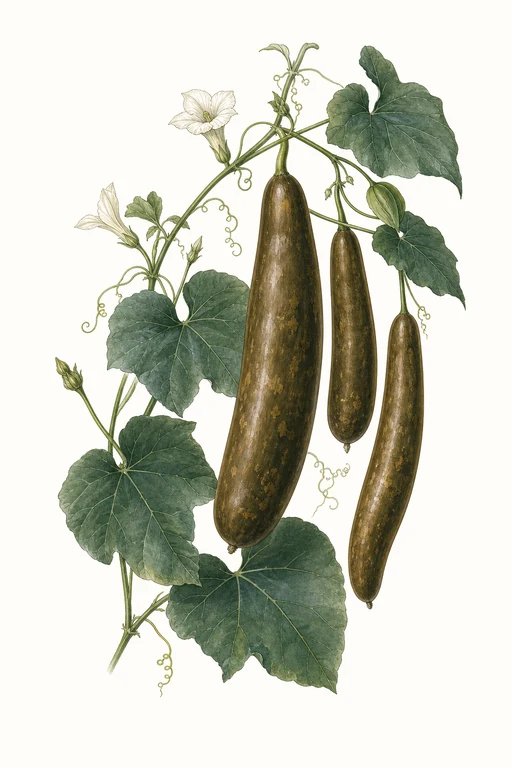
Fragrant at dusk and richly sculptural on the vine, Penggak gourd develops a smooth, firm flesh under a subtly mottled skin that turns to a deep, burnished tone as it matures.
The flavor is mellow and gently savory with a clean, tender bite when young, becoming more pronounced and hearty as the gourd reaches full size—ideal for roasting, simmering into velvety sauces, and pickling for a bright, tangy bite.
Light: Full SunMaturity: 100 DaysHabit: Vine
Planting schedules and alerts are optimized for Columbus (Zone 6b).
Crop Dates
| Milestone | Date |
|---|---|
| Start Indoors | Direct Sow |
| Last Frost | Apr 25th |
| Transplant / Sow Outdoors | May 9th |
| Harvest Begins | Aug 17th |
| Harvest Ends | Oct 16th |
Crop Details
| Trait | Value |
|---|---|
| Days to Maturity | 100 |
| Sun Requirements | Full Sun |
| Growth Habit | Vine |
| Support Needed | Trellis |
| Planting Depth | Normal |
| Germination Temp (°F) | 75 |
| Min Soil Temp (°F) | 65 |
| Min Night Temp (°F) | 55 |
| Harden Off (days) | 10 |
Culinary Notes

Chef's Note
Penggak’s young fruit eats with a crisp, clean snap, but it earns its keep as it matures—firm flesh roasts down into a sweet-savory, tender-melt texture that thick sauces love. Use it where you want body without heaviness, and give it an acid hit (lime or vinegar) to sharpen that mellow gourdy savoriness.

Best Uses
- roasting wedges until burnished and caramel-fringed
- simmering into a velvety braise or curry base that holds together
- quick-pickling for crisp, bright tang
- thick purees for soups or smoky spreads

Flavor Profile

Kitchen Pairings
Frequently Asked Questions
What pest or disease most commonly affects Lagenaria siceraria (bottle gourd), and how do I manage it?
How often should I water Lagenaria siceraria during the main growing phase, and what soil moisture level should I keep?
How can I tell when Lagenaria siceraria (bottle gourd) is ready to harvest?
Sowing Tips

Transplant Conditions
Wait until soil reaches 65°F and nights stay above 55°F before moving outdoors. Harden off for 10 days first.

Direct Sow Preferred
Sensitive roots — does not transplant well. If starting indoors, use biodegradable pots and disturb roots as little as possible when moving outdoors.
Expert Note

For best harvests, start plants only after soil warms, then keep vines well-watered early and avoid disturbing roots once set in the garden.