
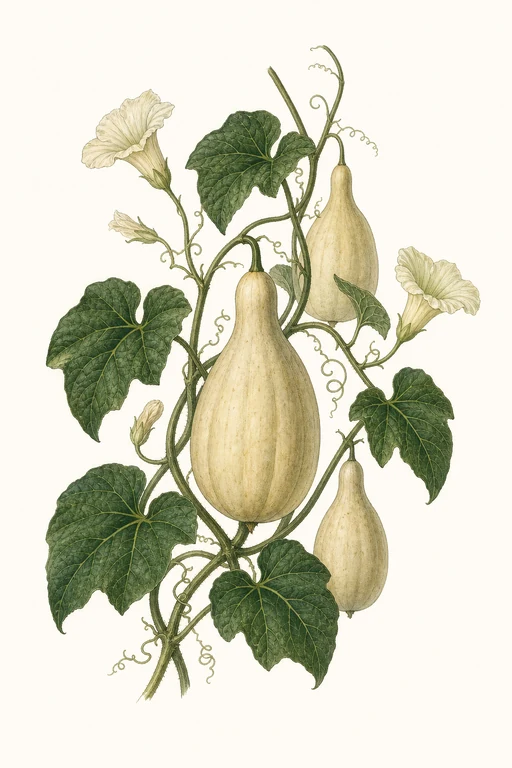
Penguin Gourd
A charming showpiece with a delightfully smooth, pale skin—Penguin Gourd ripens to a distinctive silhouette that’s as satisfying to grow as it is to admire.
The flesh is tender and mild, with a clean, refined flavor that lends itself beautifully to hearty roasting and to shaping into ready-to-use forms for sauces and preserves. Let this warm-season vining variety trail, climb, and mature into a harvest of elegant, collectible gourds at about 90 days.
Light: Full SunMaturity: 90 DaysHabit: Vine
Planting schedules and alerts are optimized for Columbus (Zone 6b).
Crop Dates
| Milestone | Date |
|---|---|
| Start Indoors | Apr 25th |
| Last Frost | Apr 25th |
| Transplant / Sow Outdoors | May 9th |
| Harvest Begins | Aug 7th |
| Harvest Ends | Oct 16th |
Crop Details
| Trait | Value |
|---|---|
| Days to Maturity | 90 |
| Sun Requirements | Full Sun |
| Growth Habit | Vine |
| Support Needed | Trellis |
| Planting Depth | Normal |
| Germination Temp (°F) | 75 |
| Min Soil Temp (°F) | 65 |
| Min Night Temp (°F) | 55 |
| Harden Off (days) | 10 |
Culinary Notes

Chef's Note
A mild, tender Lagenaria gives you a clean canvas—roast it hard and hot to drive off water so it turns softly creamy rather than watery. Season assertively (brown butter, sage, citrus, smoke) and it will hold its shape and mouthfeel beautifully in both purées and skillet browns.

Best Uses
- roasting wedges or chunks until bronzed and creamy in the center
- pureeing into a silky soup or pasta sauce base with stock and aromatics
- stirring into spiced preserves/chutneys where it drinks up vinegar and sugar
- shaping/cooking into thick rounds for frying or skillet browning

Flavor Profile

Frequently Asked Questions
How do I prevent and treat powdery mildew on Lagenaria siceraria (birdhouse/penguin gourd)?
How often should I water Lagenaria siceraria during the main growing phase?
When are penguin gourds (Lagenaria siceraria) ready to harvest?
Sowing Tips

Transplant Conditions
Wait until soil reaches 65°F and nights stay above 55°F before moving outdoors. Harden off for 10 days first.

Direct Sow Preferred
Sensitive roots — does not transplant well. If starting indoors, use biodegradable pots and disturb roots as little as possible when moving outdoors.
Expert Note

Grow as a warm-season vine; start seeds only once nights are consistently warm, and keep root disturbance minimal if using transplants.