
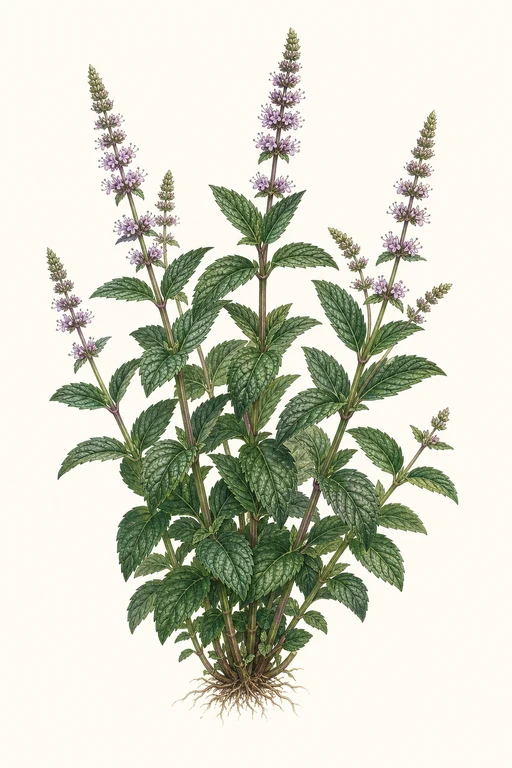
Peppermint
Cool, bright peppermint fragrance rises the moment you brush the foliage—an invigorating blend of minty lift and sweet herbal depth.
The leaves are crisp and richly textured, forming a dense, upright clump that’s wonderfully aromatic and dependable in the garden. Grow Peppermint for its bold, refreshing character in herbal infusions, flavoring syrups and sauces, and for drying or blending into fragrant teas.
Light: Full SunMaturity: 60 DaysHabit: Spreading
Planting schedules and alerts are optimized for Columbus (Zone 6b).
Crop Dates
| Milestone | Date |
|---|---|
| Start Indoors | Mar 14th |
| Last Frost | Apr 25th |
| Transplant / Sow Outdoors | Jun 20th |
| Harvest Begins | Aug 19th |
| Harvest Ends | Oct 16th |
Crop Details
| Trait | Value |
|---|---|
| Days to Maturity | 60 |
| Sun Requirements | Full Sun |
| Growth Habit | Spreading |
| Support Needed | None |
| Planting Depth | Normal |
| Germination Temp (°F) | 70 |
| Min Soil Temp (°F) | 45 |
| Min Night Temp (°F) | 40 |
| Harden Off (days) | 7 |
Culinary Notes

Chef's Note
Peppermint’s menthol edge hits first, so it wants dishes where freshness is the headline—finished off-heat or steeped hot-and-then-removed to keep the aroma clean. Use it like a flavor spotlight: a little goes a long way, and chopped leaves shine where they stay crisp rather than melting away.

Best Uses
- steeped tea and cold infusions for maximum aroma
- quick syrup reduction for cocktails and desserts
- chopped fresh leaf over fruit and chocolate to keep it crisp
- mint-forward finishing in yogurt, chutney, or pan sauces at the end of cooking

Flavor Profile

Kitchen Pairings
Frequently Asked Questions
What pest or disease commonly affects Mentha × piperita, and how can I control it in my garden?
How often should I water peppermint (Mentha × piperita) during its main growing phase?
How do I tell when peppermint (Mentha × piperita) is ready to harvest?
Sowing Tips

Transplant Conditions
Wait until soil reaches 45°F and nights stay above 40°F before moving outdoors. Harden off for 7 days first.
Expert Note

Keep peppermint in a container (at least 12 in / 30 cm wide) and pinch tips regularly to prevent flowering and encourage dense, minty growth.