
Perpetual Spinach
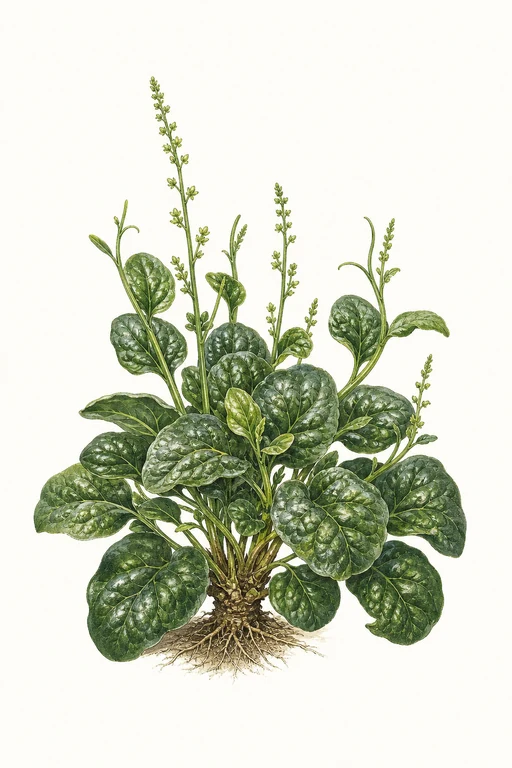
Silky, tender leaves unfurl in a steady, near-constant rhythm—Perpetual Spinach delivers a lush, fresh green that feels almost velvet to the palate.
Expect a mild, spinach-sweet flavor with a crisp-yet-gentle texture, ideal for repeat harvests over weeks as new growth keeps coming. Grow it for ongoing leaf supply and for vibrant, green-forward dishes—stirred, sautéed, or folded into sauces—whenever you want a quick, wholesome boost of garden flavor.
Light: Part SunMaturity: 45 DaysHabit: Rosette
Crop Dates : 8a
| Milestone | Date |
|---|---|
| Start Indoors | Direct Sow |
| Last Frost | Apr 1st |
| Transplant / Sow Outdoors | Apr 1st |
| Harvest Begins | May 16th |
| Harvest Ends | Nov 5th |
Crop Details
| Trait | Value |
|---|---|
| Days to Maturity | 45 |
| Sun Requirements | Part Sun |
| Growth Habit | Rosette |
| Support Needed | None |
| Planting Depth | Normal |
| Germination Temp (°F) | 70 |
| Min Soil Temp (°F) | 40 |
| Min Night Temp (°F) | 30 |
| Harden Off (days) | 5 |
Culinary Notes

Chef's Note
Perpetual Spinach’s big talent is how fast it turns silky without going dull—perfect for last-minute heat where you want tenderness, not mush. Keep flavors bright (lemon/oil) and let dairy or cheese finish it, because its mild sweetness needs a clean spark to sing.

Best Uses
- hot quick-sauté to keep leaves supple (add at the end and stir until just collapsed)
- steam-and-squeeze greens for a glossy, spoonable side
- fold into cream-forward sauces (it disappears fast but stays silky)
- toss raw or lightly dressed for a tender, green-forward salad base

Flavor Profile

Kitchen Pairings
Frequently Asked Questions
What pest or disease most commonly affects Beta vulgaris var. cicla (perpetual spinach), and how can I control it?
How often should I water Swiss chard (Beta vulgaris var. cicla) during the main growing phase?
How do I know when to harvest perpetual spinach leaves from Beta vulgaris var. cicla?
Sowing Tips

Transplant Conditions
Wait until soil reaches 40°F and nights stay above 30°F before moving outdoors. Harden off for 5 days first.
Expert Note

For “perpetual” spinach (spinach beet), start indoors for an earlier, smoother harvest then keep plants in cool weather and shade cloth during brief warm spells to extend the season.