
Petunia
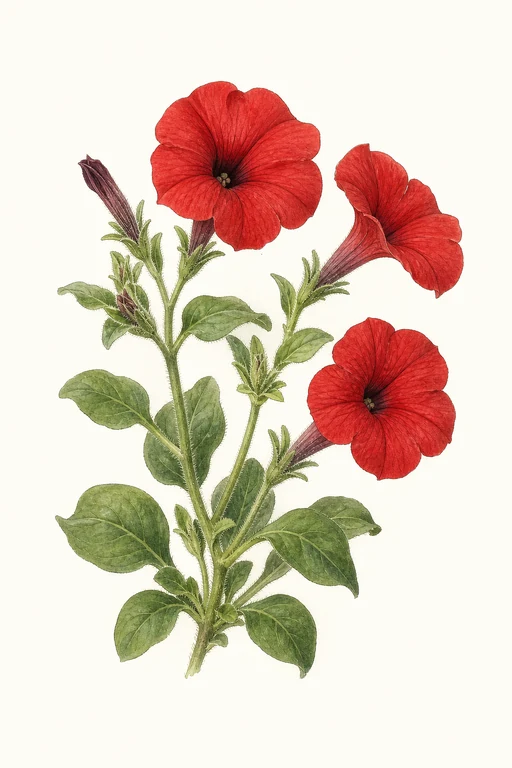
Velvety, trumpet-shaped blooms spill in a cascading ribbon, opening to a velour-like glow that feels almost luminous against the foliage.
Petunia ‘Petunia’ (trailing/spreading) delivers a long, showy season of color with a soft, slightly ruffled texture and a dependable, ground-hugging habit that makes every bed and container look lavish. Ideal for bedding displays and hanging baskets where its trailing drape can be admired at every angle.
Light: Full SunMaturity: 70 DaysHabit: Spreading
Location not set yet
Location not set yet
Enter your ZIP for local crop dates
Petunia Planting Dates by USDA Zone
Estimated US hardiness-zone windows for sow, transplant, and harvest. Enter a US ZIP above for exact local dates, or open a zone below.
| Zone | Start Indoors | Sow / Transplant | Harvest |
|---|---|---|---|
| Zone 1a | Protected Environment Only | ||
| Zone 1b | Protected Environment Only | ||
| Zone 2a | Mar 16th | May 11th | Jul 20th – Aug 29th |
| Zone 2b | Mar 6th | May 1st | Jul 10th – Aug 25th |
| Zone 3a | Mar 6th | May 1st | Jul 10th – Sep 1st |
| Zone 3b | Mar 10th | May 5th | Jul 14th – Sep 21st |
| Zone 4a | Mar 6th | May 1st | Jul 10th – Sep 24th |
| Zone 4b | Mar 4th | Apr 29th | Jul 8th – Sep 27th |
| Zone 5a | Feb 27th | Apr 24th | Jul 3rd – Sep 30th |
| Zone 5b | Feb 23rd | Apr 20th | Jun 29th – Oct 5th |
| Zone 6a | Feb 20th | Apr 17th | Jun 26th – Oct 10th |
| Zone 6b | Feb 14th | Apr 11th | Jun 20th – Oct 16th |
| Zone 7a | Feb 9th | Apr 6th | Jun 15th – Oct 20th |
| Zone 7b | Jan 30th | Mar 27th | Jun 5th – Oct 28th |
| Zone 8a | Jan 21st | Mar 18th | May 27th – Nov 5th |
| Zone 8b | Jan 12th | Mar 9th | May 18th – Nov 12th |
| Zone 9a | Dec 26th | Feb 20th | May 1st – Nov 26th |
| Zone 9b | Dec 1st | Jan 26th | Apr 6th – Dec 9th |
| Zone 10a | Continuous Production | ||
| Zone 10b | Continuous Production | ||
| Zone 11a | Continuous Production | ||
| Zone 11b | Continuous Production | ||
| Zone 12a | Continuous Production | ||
| Zone 12b | Continuous Production | ||
| Zone 13a | Continuous Production | ||
| Zone 13b | Continuous Production | ||
Crop Details
| Trait | Value |
|---|---|
| Days to Maturity | 70 |
| Sun Requirements | Full Sun |
| Growth Habit | Spreading |
| Support Needed | None |
| Planting Depth | Surface |
| Germination Temp (°F) | 70 |
| Min Soil Temp (°F) | 50 |
| Min Night Temp (°F) | 50 |
| Harden Off (days) | 7 |
Culinary Notes

Chef's Note
Despite being marked edible, petunia is typically grown as an ornamental and its petals aren’t known for consistent, robust flavor—think more visual lift than reliable eating. If you use it at all, keep it as a careful, pesticide-free garnish and pair with bright, clean flavors like lemon and mint so the bloom’s subtlety doesn’t get swallowed.

Best Uses
- Use only as a rare garnish if you know the blooms are grown for edibility and are pesticide-free
- Confetti-like petal scatter on cold plates (best with very light dressing)
- Infuse cautiously in syrups or vinegars only in tiny test batches

Flavor Profile

Kitchen Pairings
Frequently Asked Questions
What pest or disease most commonly affects Petunia (Petunia × atkinsiana), and how can I treat it?
How often should I water Petunia during active growth, and what soil moisture level should I aim for?
How do I know when Petunia is ready to harvest?
Sowing Tips

Transplant Conditions
Wait until soil reaches 50°F and nights stay above 50°F before moving outdoors. Harden off for 7 days first.
Expert Note

Start petunia seeds indoors early under warmth/light, then transplant only after nights are reliably warm to avoid chilling injury.