
Pink Plume Celery
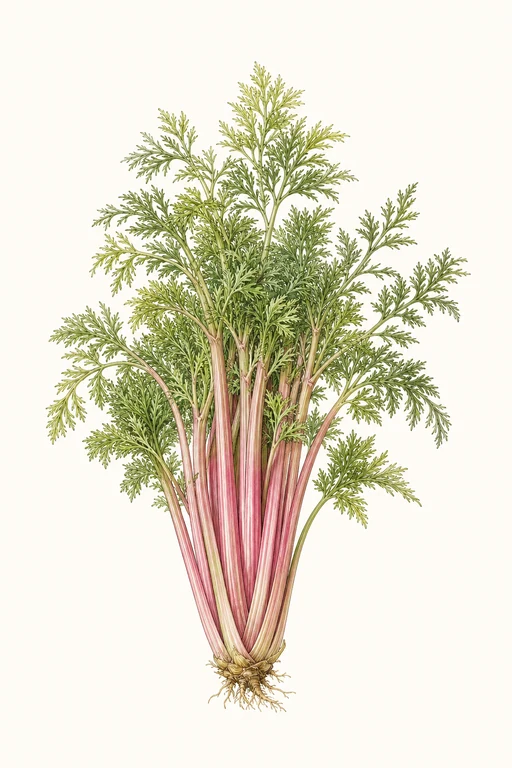
Silken, plume-like stalks in a blush-pink to rosy-rose tone rise with a tender snap and a pleasantly crisp, clean celery fragrance.
Pink Plume Celery forms an upright, compact clump with finely textured leaves and a mild, bright flavor that stays sweet and refreshing from garden to table. Ideal for fresh use and for adding color and crunch to salads, slaws, and vibrant garnishes, its distinctive pink cast makes every harvest feel like a small celebration.
Light: Part SunMaturity: 85 DaysHabit: Upright
Crop Dates : 11a
| Milestone | Date |
|---|---|
| Start Indoors | — |
| Climate | Frost-Free Climate |
| Transplant / Sow Outdoors | Oct 1st |
| Harvest Begins | Dec 25th |
| Harvest Ends | Feb 28th |
Crop Details
| Trait | Value |
|---|---|
| Days to Maturity | 85 |
| Sun Requirements | Part Sun |
| Growth Habit | Upright |
| Support Needed | None |
| Planting Depth | Normal |
| Germination Temp (°F) | 70 |
| Min Soil Temp (°F) | 45 |
| Min Night Temp (°F) | 30 |
| Harden Off (days) | 7 |
Culinary Notes

Chef's Note
Pink Plume brings a cleaner, sweeter celery crunch than many stringier types, so it stays pleasant even raw—no need to cook away the bite. Use it as the cold, green-pink contrast in anything creamy or briny; it will look great and keep its snap.

Best Uses
- raw slaws and mixed-leaf salads where you want color + a crisp bite
- pickled celery batons for a pink-tinged crunch in relishes
- finishing garnish for soups, chowders, and seafood platters—keeps its shape
- quick celery relish (finely chopped) to add cold snap to sandwiches and wraps

Flavor Profile

Kitchen Pairings
Frequently Asked Questions
What pest or disease most commonly affects Apium graveolens var. dulce (Pink Plume celery), and how can I control it?
How often should I water Pink Plume celery during the main growing phase, and what soil moisture target should I keep?
How do I tell when Pink Plume celery is ready to harvest (Apium graveolens var. dulce)?
Sowing Tips

Transplant Conditions
Wait until soil reaches 45°F and nights stay above 30°F before moving outdoors. Harden off for 7 days first.
Expert Note

For best pink stalk color and tenderness, keep soil consistently moist and blanch/lightly cover stalks as they thicken.