
Plum Purple
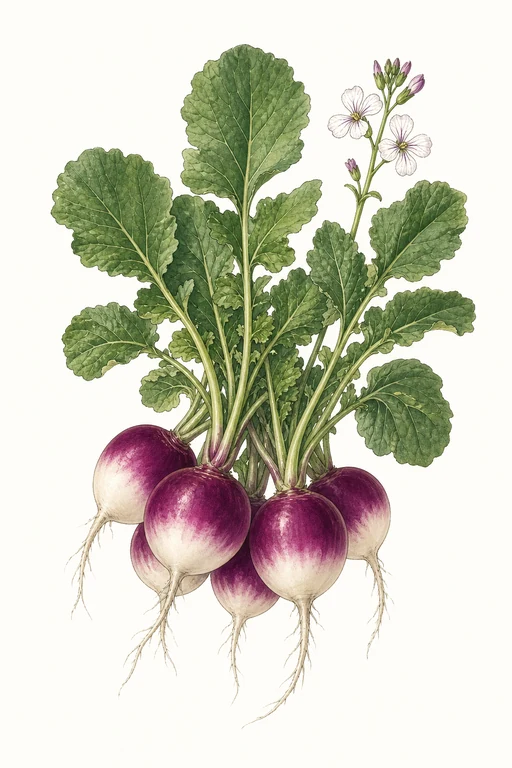
Plum Purple radishes bloom with a jewel-like, deep plum-purple shoulder that fades to a crisp white tip, offering a bright, peppery snap and a clean, juicy bite.
At just 28 days, ‘Plum Purple’ forms smooth, globe-to-oval roots with a tender, fine-grained texture that stays pleasantly crisp. Ideal for fresh market-style salads and garnishes, these radishes also shine when sliced into vivid platters for quick, colorful flavor.
Light: Full SunMaturity: 28 DaysHabit: Taproot
Crop Dates : 8a
| Milestone | Date |
|---|---|
| Start Indoors | Direct Sow |
| Last Frost | Apr 1st |
| Transplant / Sow Outdoors | Apr 1st |
| Harvest Begins | Apr 29th |
| Harvest Ends | Nov 5th |
Crop Details
| Trait | Value |
|---|---|
| Days to Maturity | 28 |
| Sun Requirements | Full Sun |
| Growth Habit | Taproot |
| Support Needed | None |
| Planting Depth | Normal |
| Germination Temp (°F) | 55 |
| Min Soil Temp (°F) | 40 |
| Min Night Temp (°F) | 35 |
| Harden Off (days) | Not Required |
Culinary Notes

Chef's Note
‘Plum Purple’ is a market radish—tender, finely textured, and built to stay crisp under dressing, giving you that sharp, juicy pop without going woody. Slice it paper-thin for platters or shave it cold; the purple shoulder stays visually punchy while the white tip delivers the cleaner peppery finish.

Best Uses
- thin-slice salad radish for dressed greens (no wilting, stays crisp)
- ice-cold crudités platter with flaky salt and citrus
- quick pickles—sliced rounds that keep their jewel color

Flavor Profile

Kitchen Pairings
Frequently Asked Questions
What pest or disease is most likely on Brassicaceae radish (Raphanus sativus), and how do I control it?
How often should I water radish (Raphanus sativus) during the main growing phase for Purple radish?
How can I tell when my Raphanus sativus is ready to harvest?
Sowing Tips

Transplant Conditions
Wait until soil reaches 40°F and nights stay above 35°F before moving outdoors.
Expert Note

For the sweetest flavor and quickest growth, sow radishes every 1–2 weeks and keep the soil evenly moist to prevent pithiness and bolting.