
Purple Coban Tomatillo
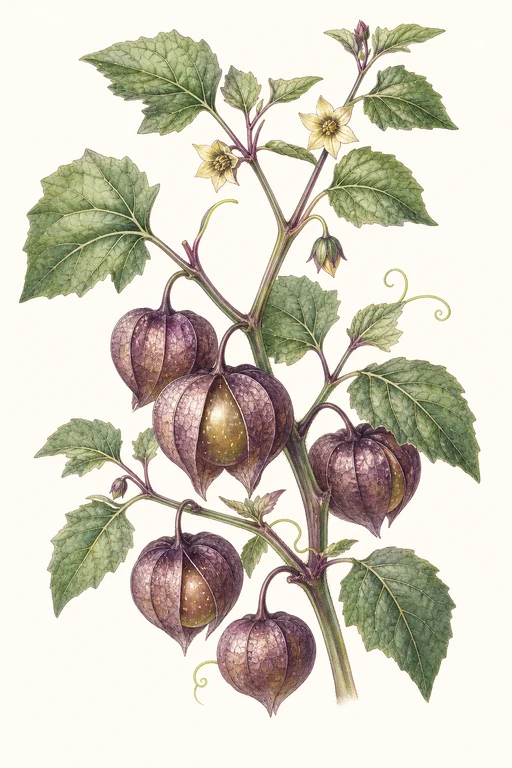
A velvet hush of flavor begins with Purple Coban Tomatillo: tangy, lightly sweet fruit wrapped in papery husks that deepen to rich purples as they ripen.
Expect a juicy, seed-speckled bite with a bright, citrusy snap—ideal for turning into vivid sauces and salsas, or for roasting to coax out deeper, caramel-tinged notes. Grow this 75-day standout for a long harvest window and a striking garden presence, where the husks become as ornamental as they are useful.
Light: Full SunMaturity: 75 DaysHabit: Indeterminate
Planting schedules and alerts are optimized for Columbus (Zone 6b).
Crop Dates
| Milestone | Date |
|---|---|
| Start Indoors | Mar 7th |
| Last Frost | Apr 25th |
| Transplant / Sow Outdoors | Jun 20th |
| Harvest Begins | Sep 3rd |
| Harvest Ends | Oct 16th |
Crop Details
| Trait | Value |
|---|---|
| Days to Maturity | 75 |
| Sun Requirements | Full Sun |
| Growth Habit | Indeterminate |
| Support Needed | Stake |
| Planting Depth | Deep |
| Germination Temp (°F) | 75 |
| Min Soil Temp (°F) | 60 |
| Min Night Temp (°F) | 50 |
| Harden Off (days) | 10 |
Culinary Notes

Chef's Note
Purple Coban Tomatillo brings a more velvety, richly purple ripeness with the same sharp, citrusy snap—its juicy, seed-speckled flesh stays lively instead of turning flat. Roast or char it and the acidity softens into caramel-leaning tang, making it ideal for sauces that need to cling to tacos without getting watery.

Best Uses
- blistered-to-rough salsa verde with visible tomatillo seeds
- roasted tomatillo-chile sauce for tacos and enchiladas
- quick-pickled tomatillos for crunchy, puckering bite
- charred tomatillo wedges tossed into warm grain bowls

Flavor Profile

Frequently Asked Questions
What’s the most common pest or disease on Physalis philadelphica (Purple Coban tomatillo), and how do I control it?
How often should I water Purple Coban tomatillo during the main growing phase?
How can I tell when Physalis philadelphica fruit is ready to harvest?
Sowing Tips

Transplant Conditions
Wait until soil reaches 60°F and nights stay above 50°F before moving outdoors. Harden off for 10 days first.
Expert Note

Start indoors early, transplant only once nights are reliably warm, and remove any flowers for the first week after transplanting to boost establishment.