
Purple Coban
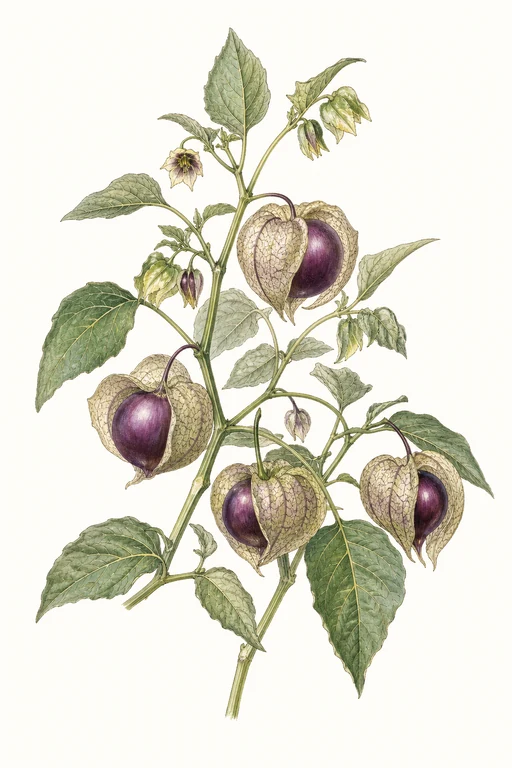
Aromatic and intriguingly tart, Purple Coban tomatillos ripen to a deep, wine-purple glow beneath papery husks—like small lanterns holding their own bright bite.
The fruit’s flesh is juicy and firm with a smooth, slightly seedy texture that bursts with tang when used for bold salsas and vibrant sauces. Grow them for a long harvest window and enjoy their distinctive color as much as their lively flavor in fresh preparations and quick pickling.
Light: Full SunMaturity: 75 DaysHabit: Indeterminate
Planting schedules and alerts are optimized for Columbus (Zone 6b).
Crop Dates
| Milestone | Date |
|---|---|
| Start Indoors | Mar 14th |
| Last Frost | Apr 25th |
| Transplant / Sow Outdoors | Jun 20th |
| Harvest Begins | Sep 3rd |
| Harvest Ends | Oct 16th |
Crop Details
| Trait | Value |
|---|---|
| Days to Maturity | 75 |
| Sun Requirements | Full Sun |
| Growth Habit | Indeterminate |
| Support Needed | Stake |
| Planting Depth | Deep |
| Germination Temp (°F) | 75 |
| Min Soil Temp (°F) | 60 |
| Min Night Temp (°F) | 50 |
| Harden Off (days) | 10 |
Culinary Notes

Chef's Note
Purple Coban tomatillos bring a wine-deep color and a cleaner, more aggressive tang than the average tomatillo—firm enough to hold its shape in salsa and sauces without going watery. Use them for char-and-reduce applications where that bright, slightly seedy bite stays lively against fat and smoke.

Best Uses
- quick-pulse salsa verde (keep some seedy texture for body)
- charred tomatillo sauce for smoky tacos and enchiladas
- fast refrigerator pickles for tangy crunch
- reduced pan sauces where the acidity tightens and turns silky

Flavor Profile

Frequently Asked Questions
What pest or disease is most likely on Physalis philadelphica (purple coban), and how can I control it?
How often should I water Physalis philadelphica during active growth?
How do I know when purple coban Physalis philadelphica is ready to harvest?
Sowing Tips

Transplant Conditions
Wait until soil reaches 60°F and nights stay above 50°F before moving outdoors. Harden off for 10 days first.
Expert Note

Start seedlings early and transplant only when nights are reliably warm, then keep soil evenly moist to prevent fruit drop and sunscald on developing husks.